
Tag: parenting support

A mother and her young son stepping out onto a quiet front porch together during a busy holiday gathering, both taking a calm breath.
Publications

The Meltdown Before the Pie: When the Holidays Are Too Much for Your Child

Sometimes the hardest part of the holidays isn’t the cooking or the cost. It’s watching your child fall apart and not knowing why.

It was 3:15 on Thanksgiving afternoon. The turkey was resting. Twelve relatives were squeezed into the living room. And 7-year-old Mateo was under the dining table, sobbing, refusing to come out.

His mom, Ana, knelt beside the tablecloth and felt every eye in the room on her back. Her aunt said what everyone was thinking: “He’s just tired. Let him cry it out.” Her brother said something less kind.

Ana wanted to disappear. She’d spent three days cleaning and cooking. She had wanted this year to feel special. Instead, it felt like it was coming apart, and her son along with it.

(Mateo and Ana are a composite family, based on situations many parents describe. They are not real D’Veal clients.)

If you’ve lived some version of this moment, you are not alone. And your child isn’t “bad” or “spoiled.” Most of the time, a holiday meltdown is a message.

What the Meltdown Was Really Saying

Later that night, after everyone left, Ana sat on the edge of Mateo’s bed. She didn’t lecture. She just asked, “What was the hardest part of today?”

He thought for a long time. Then he said, “Everybody was loud. And Tio kept saying I was too big to sit on your lap. And I didn’t know when it was going to be over.”

There it was. Not one problem. A stack of them.

That’s how holiday stress works for a lot of kids. It isn’t one big thing. It’s the noise, the crowd, the late nights, the strange foods, the relatives who tease, and the feeling of having no control over the day. Each piece is small. Together, they can be too much for a young nervous system to handle.

Kids also soak up the stress around them. Pediatric psychologists point out that children notice when the adults in their lives are tense, and they often react to it, even when nobody says a word. Ana had been running on four hours of sleep for days. Mateo felt it.

And Ana wasn’t the only stressed adult in that house. In a November 2025 poll by the American Psychiatric Association, 41% of U.S. adults said they expected more holiday stress than the year before. About one in three said they worried about difficult family dynamics. Holiday gatherings put a lot of stressed people in one room. Kids are often the first to show it.

What Ana Did Differently in December

Ana didn’t cancel the holidays. She just changed a few things. None of them cost money.

She told Mateo the plan ahead of time. The morning of each family event, she walked him through it: who would be there, what they’d eat, and what time they’d leave. Kids handle hard days better when the day isn’t a mystery.

She picked a “break spot.” At her mom’s house, the back bedroom became Mateo’s quiet place. He could go there any time, with a book or his tablet, no questions asked. He only used it twice. Just knowing it was there helped.

She made a code word. If Mateo felt overwhelmed, he could say “pineapple.” Ana would step outside with him for five minutes. No scene, no explaining to relatives.

She kept bedtime close to normal. Not perfect. But no more 11 p.m. nights two days in a row.

She said no to one party. Her cousin’s open house was the same night as her work potluck. She skipped it. Nobody was upset. Mateo spent the evening building a blanket fort, and Ana sat on the couch for the first time all week.

She talked to her brother. Privately, before the next gathering, she asked him to stop teasing Mateo about being “too big.” It was an awkward conversation. It also worked.

She looked after herself. This was the hardest one. Ana asked her sister to bring dessert instead of making three pies herself. She went to bed earlier. She noticed that when she was calmer, Mateo was too.

Christmas wasn’t perfect. Mateo still got cranky by late afternoon. But there was no meltdown under the table. And on the drive home, he said, “That was a good day.”

Is It More Than Holiday Stress?

For many kids, holiday stress fades once school and normal routines come back in January. But sometimes the holidays bring something bigger to the surface.

It may be time to talk to a professional if your child:

  • Stays sad, worried, or irritable for more than two weeks, even on calm days
  • Has big changes in sleep or eating
  • Pulls away from friends and things they used to enjoy
  • Has meltdowns that seem much bigger than the situation
  • Says things like “I’m a burden” or talks about not wanting to be here

If your child ever talks about hurting themselves, call or text 988, the Suicide & Crisis Lifeline, any time, day or night.

Asking for help isn’t a sign that you failed as a parent. It’s a sign that you’re paying attention.

You Don’t Have to Figure It Out Alone

D’Veal Family and Youth Services has supported San Gabriel Valley families since 1993. We work with children and youth ages 0 to 20, and their families, in homes, schools, and the community. If the holidays are showing you that your child needs more support, we’d be glad to talk.

“Is your child struggling this holiday season? D’Veal Family and Youth Services is here to help. Call (626) 296-8900 or visit dveal.org. In a crisis, call or text 988 anytime.”

Want to help more San Gabriel Valley kids feel safe and supported? Visit the donate section at dveal.org to give.


Frequently Asked Questions

Why does my child have meltdowns at holiday gatherings?

Holiday gatherings pile up stressors: noise, crowds, late nights, new foods, and less control over the day. Each one is small, but together they can overwhelm a child. A meltdown is often a sign that your child has run out of ways to cope, not that they're misbehaving on purpose.

How can I prevent holiday meltdowns?

Tell your child the plan ahead of time, pick a quiet break spot, and agree on a code word they can use when it's too much. Keep bedtime close to normal and skip events that aren't important to your family. Taking care of your own stress helps, too.

What should I say to relatives who criticize how I handle my child?

Keep it short and calm, like "We've got this, thanks." If someone keeps teasing or criticizing your child, talk to them privately before the next gathering. Your child's comfort matters more than anyone's opinion of your parenting.

When should I worry that it's more than holiday stress?

If sadness, worry, or irritability lasts more than two weeks, or your child pulls away from friends and favorite activities, it may be more than holiday stress. Big changes in sleep or eating are also worth noticing. If your child talks about hurting themselves, call or text 988 right away.
A mother and her young son sitting close on the couch, the mother listening as he talks.
Publications

Is It Just Holiday Stress, or Is Something More Going On With My Child?

By D’Veal Communications Team

The holidays can be fun, and they can also be a lot. Here’s how to tell normal holiday stress from something bigger, and how to help your child feel calmer this season.

It’s the week before Thanksgiving. Your 9-year-old comes home from school and slams the door. Your teenager stays in her room all evening. Dinner turns into an argument about nothing.

Is it just the holidays? Most of the time, yes. But sometimes the holidays bring a bigger worry to the surface. Knowing the difference helps you know what to do next.

At D’Veal Family and Youth Services, we have helped children, teens, and families in the San Gabriel Valley for more than 30 years. Every year, we see how hard November and December can be on families. We also see how small changes at home can make a big difference.

Why the Holidays Can Be Hard on Kids

Grown-ups feel holiday stress too. In a 2025 national poll, about 4 in 10 adults said they expected this holiday season to be more stressful than the last one. Kids notice when the adults around them are tired or worried, even when nobody says a word.

Kids also lose the routine that helps them feel safe. School is out, bedtimes get later, and weekends fill up with trips and parties. Many kids picture a “perfect” holiday, and real life rarely looks like the movies. Big family gatherings can be loud and crowded, and a relative who teases can make a long day feel even longer.

For some families, the holidays also bring an empty seat at the table. A loved one may have passed away, or a parent may live somewhere else or have to work. When money is tight, kids can usually tell, and some quietly feel guilty for wanting things.

What Holiday Stress Looks Like

Kids don’t usually say, “I’m stressed.” Instead, you may see more tantrums or crankiness than usual. Your child may cling to you, complain of stomachaches or headaches, or have trouble sleeping. Some kids pull away from family and friends.

Teens can be harder to read. They may act like they don’t care about the holidays at all. In our experience, they often care a lot.

“A meltdown is often a message, not bad behavior. It can mean your child has simply run out of ways to cope.”

Holiday Stress or Something More?

Most holiday stress comes and goes around busy days, and it fades once life gets back to normal in January. A child who is cranky after a long family dinner but feels better after a good night’s sleep is usually just tired and overwhelmed.

It’s different when the change sticks around. If your child seems sad or “flat” most of the time, pulls away from everyone, or stops enjoying things they used to love, and it lasts more than two weeks, that’s a sign they may need more support. Our advice is simple: if something has felt “off” for more than two weeks, it’s worth talking to someone. You know your child best. Trust what you see.

If your child ever talks about wanting to die or hurt themselves, take it seriously every time. Call or text 988 any time, day or night. In an emergency, call 911.

Simple Ways to Make the Holidays Calmer

You can’t take away every source of stress, but you can make the season feel safer for your child. Start by keeping a few routines in place. Try to keep bedtime and mealtimes close to normal, even on days off. Before a busy day, tell your child the plan: who they’ll see, what you’ll do, and when you’ll head home. Kids handle hard days better when the day isn’t a mystery.

It’s also okay to say no. You don’t have to go to every party. Leave room for quiet time, like a short walk or a book, to reset a hard day. At big gatherings, agree on a code word or a quiet room your child can go to if things get too loud.

If money is tight, a few calm, honest words help more than silence. Something like “We’re keeping gifts small this year, and that’s okay” goes a long way. And if someone is missing this year, say their name. Share a favorite story or make their favorite dish together.
Last, take care of yourself. Rest when you can, accept help, and let go of “perfect.” When you’re calmer, your child is calmer too.

When Tips Aren’t Enough

Sometimes holiday stress shows a bigger problem, like worry that won’t go away, deep sadness, grief, or family conflict. That’s when extra support helps.

D’Veal works with children and teens from birth to age 20, and their families. Our counselors come to you, at home, at school, or in the community, so getting help doesn’t mean one more trip in an already busy season. We work with the whole family, not just the child.

“Is the holiday season weighing on your child or your family? D’Veal Family and Youth Services is here to help. Call (626) 296-8900 or visit dveal.org. In a crisis, call or text 988 anytime.”

Want to help more San Gabriel Valley kids feel safe and supported? Visit the donate section at dveal.org to give.
Frequently Asked Questions

Is it normal for my child to act out more during the holidays?

Yes. Late nights, busy days, and changes in routine can make any child cranky. Most kids feel better once things get back to normal. If it lasts more than a couple of weeks, talk to a professional.

How can I tell if my teen is stressed or depressed?

Stress usually comes and goes with busy days. If your teen seems sad or crabby most days for two weeks or more, or stops caring about things they used to love, it's time to reach out for help.

How do I help my child through the holidays after a family loss?

Talk about the person who died and let your child help pick which traditions to keep. Sad moments may come and go, and that's normal. Let your child have fun without feeling guilty.

Where can San Gabriel Valley families get help for a child?

D'Veal Family and Youth Services helps children and teens from birth to age 20, at home, at school, and in the community. Call (626) 296-8900 or visit dveal.org. In a crisis, call or text 988.
A father and his teenage son walk side by side down a quiet neighborhood street at dusk, talking.
Publications

When the Call Is About Your Child

By D’Veal Communications Team

What to do if you learn your child has been bullying someone else, and why this hard moment can be a turning point.

Greg was in a work meeting when his phone buzzed with the school’s number. He stepped into the hallway, expecting a fever or a forgotten lunch.

It was the assistant principal. “I’m calling about Eli,” she said. “We’ve had several reports that he’s been targeting another student. Name-calling in the locker room, and some messages online. I’d like to set up a meeting.”

Greg’s first thought was: That’s not my kid. Eli was 13. He was funny and a little goofy, and he still hugged his grandma goodbye. Greg’s second thought, which came a few seconds later and felt much worse, was: What if it is?

If you’ve gotten a call like this, or you’re worried you might, this post is for you. Learning that your child has hurt someone is painful and confusing. It can also be one of the most important parenting moments you’ll ever have.

(Greg and Eli’s story is a composite, drawn from experiences many families share. Names and details are not from any one real family.)

Your First Reaction Is Normal. Your Next Step Matters
More.

Most parents in Greg’s shoes feel a rush of emotions at once: shock, embarrassment, anger, fear. Some want to defend their child right away. Others want to come down hard the moment the kid walks in the door.

Both reactions make sense. Neither one helps much at first.

Greg took a breath and said what he later called the best thing he did that day: “Thank you for telling me. I want to understand what happened. When can we meet?”

He didn’t argue, and he didn’t promise a punishment on the spot. He listened. That gave him something he needed before talking to Eli: the facts.

When you get a call like this, try to:

  • Listen to the school before you respond. Ask what was reported, how often, and what the school has seen.
  • Ask for specifics. Dates, examples, and any messages or screenshots help you understand the full picture.
  • Hold off on a verdict. You can take it seriously without deciding everything in the first five minutes.
  • Keep the other child in mind. Somewhere, another family is hurting too.

Why Kids Bully

It’s tempting to think kids who bully are just “mean kids.” The truth is usually more complicated.

Some kids who bully are popular and like being in charge. They may use put-downs to stay on top. Others are struggling. They may be anxious or depressed, dealing with stress at home, or easily pulled along by friends. Some have been bullied themselves and are passing the hurt along.

None of that excuses the behavior. But understanding the “why” is what helps it stop.

The CDC notes that young people who bully others face a higher risk of problems later on, like substance use, trouble in school, and violence as they get older. That’s why stepping in now matters so much. You’re not just protecting another child. You’re protecting your own.

The Conversation With Eli

After the school meeting, Greg waited until after dinner. He asked Eli to take a walk with him around the block.

“I talked with your school today,” he said. “I want to hear your side. I’m not going to yell. But I do need you to be honest.”

At first, Eli said what most kids say. “It was a joke. Everybody does it. He’s annoying.”

Greg didn’t argue. He asked, “How do you think it felt for him, reading those messages?”

Eli was quiet for half a block. Then he said, “Probably bad.”

It took a few more walks, but the rest came out. Since his parents’ divorce in the spring, Eli had been angry a lot, and he didn’t know where to put it. His new friend group at school traded insults all day. Picking on one kid made Eli feel like he belonged. And the boy he targeted had once laughed at him in PE. In Eli’s mind, that made it even.

Here’s what helped Greg keep the conversation going:

  • Stay calm and curious. Ask open questions: “What happened?” “What was going on for you?”
  • Build empathy. Ask how the other child might have felt. Kids often haven’t stopped to think about it.
  • Name the behavior, not the child. “What you did was hurtful” lands better than “You’re a bully.”
  • Make the expectation clear. “This stops now. I know you can do better, and I’m going to help.”

Consequences That Teach

Greg’s instinct was to take Eli’s phone for the rest of the year. Instead, he and the school worked out a plan that matched what happened:

  1. A clear, related consequence. Eli lost access to the group chat and social apps for a set amount of time, since that’s where much of the bullying happened.
  2. A way to make it right. With the counselor’s help, Eli wrote an apology. The school decided how and whether to share it, based on what the other student wanted.
  3. More supervision, not less connection. Greg checked in daily about school and friends. He also made a point of spending one-on-one time with Eli each week.
  4. Help with the feelings underneath. Greg reached out for counseling so Eli could work through the anger he’d been carrying since the divorce.

The goal isn’t to make a child feel like a bad person. It’s to help them understand the harm, take responsibility, and learn better ways to handle big feelings.

When It’s Time for More Support

Sometimes a firm talk and a few changes are enough. Sometimes they aren’t. Consider reaching out for professional help if your child:

  • Keeps bullying after clear consequences
  • Gets into frequent fights or seems angry much of the time
  • Is dealing with a big change, like a divorce, a move, or a loss
  • Has been bullied themselves
  • Seems anxious, down, or not like themselves

Asking for help isn’t a sign you’ve failed as a parent. It’s a sign you’re taking your child’s future seriously.

A few months later, Greg got another call from the school. This time it was a teacher. She wanted to tell him Eli had stepped in when a younger student was being teased in the hallway. Greg sat in his car for a minute before driving home.

“A child who has bullied others is not a lost cause. With the right support, this can be the moment they learn empathy that lasts.”

D’Veal Family and Youth Services provides individual and family counseling, crisis intervention and prevention, and school-based mental health services for children and youth ages 0 to 20. We meet families in homes, schools, and community settings across the San Gabriel Valley. We help kids understand what’s driving their behavior and learn better ways to handle anger and stress. We also help parents feel steady through the whole process.

“Worried about your child’s behavior toward others? D’Veal Family and Youth Services is here to help. Call (626) 296-8900 or visit dveal.org.”

Want to help more San Gabriel Valley kids feel safe and supported? Visit the donate section at dveal.org to give.

Frequently Asked Questions

What should I do if the school says my child is bullying someone?

Stay calm and listen first. Ask the school for specifics like dates, examples, and any messages. Then talk with your child openly and work with the school on a plan that includes clear consequences and a way to make things right.

Why would my child bully other kids?

There's rarely one reason. Some kids bully to gain status or feel in control. Others are dealing with stress, anger, anxiety, or changes at home, or have been bullied themselves. Understanding the reason doesn't excuse the behavior, but it helps you stop it.

What consequences work best for a child who bullies?

Consequences work best when they connect to what happened. For example, losing access to an app where online bullying took place. Pair consequences with a way to repair the harm and with closer support at home, not just punishment.

When should a child who bullies see a counselor?

Consider counseling if the bullying continues after consequences, if your child seems angry or down much of the time, or if they're going through a big change like a divorce or move. Counseling helps kids understand their feelings and learn healthier ways to cope. D'Veal can be reached at (626) 296-8900.

how to talk to your child about bullying
Publications

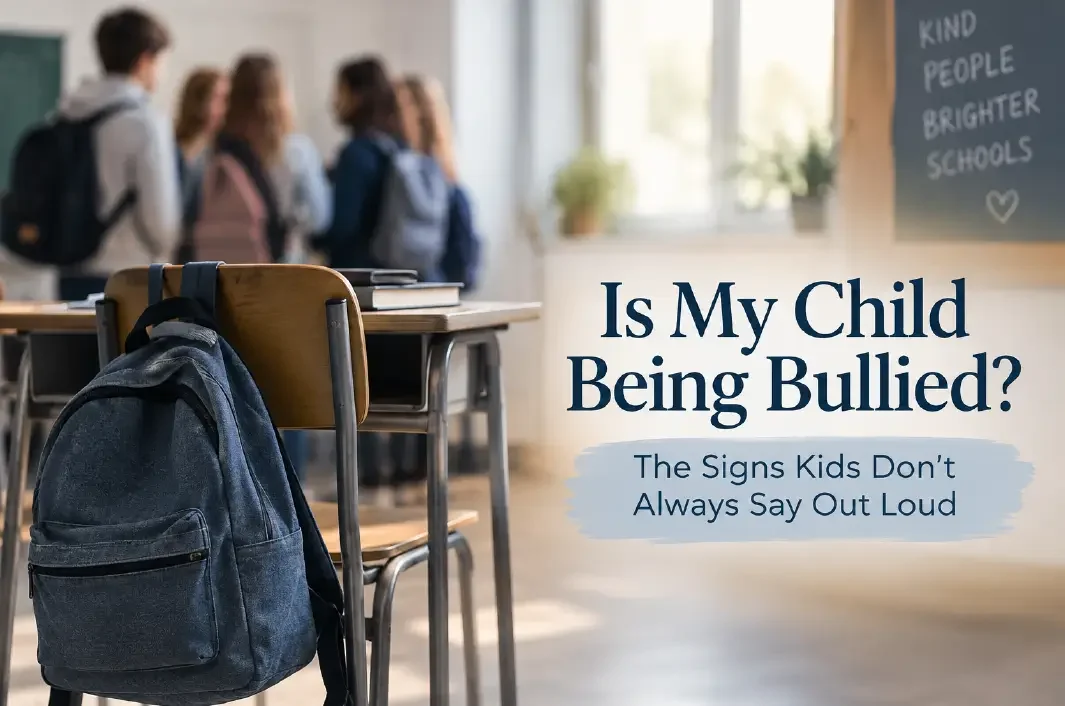
Is My Child Being Bullied? The Signs Kids Don’t Always Say Out Loud

By D’Veal Family and Youth Services

October is National Bullying Prevention Month. Here’s how to spot the quiet signs of bullying, what to say when your child finally opens up, and how to get the school and the right support on your side.

Your son used to talk the whole ride home. Lately he stares out the window. He says he has a stomachache most school mornings. His new hoodie came home with a torn sleeve, and when you asked, he shrugged and said he “fell.” Nothing he says is alarming on its own. But together, it doesn’t feel like him.

Many parents first notice bullying this way. Not because their child tells them, but because something quietly changes.

About one in five U.S. high school students said they were bullied at school in the past year, according to the CDC’s 2023 Youth Risk Behavior Survey. That number rose from 15% in 2021 to 19% in 2023. In middle school, it is even more common. And fewer than half of students who are bullied tell an adult at school.

At D’Veal Family and Youth Services, we have worked with children, teens, and families across the San Gabriel Valley for more than 30 years, under the leadership of founder and CEO John McCall. This month, we want to help parents and caregivers do three things: recognize bullying when kids stay silent, respond in a way that helps, and know when it’s time to bring in more support.

What Bullying Is, and What It Isn’t

Not every unkind moment is bullying. Kids argue, tease, and hurt each other’s feelings as they learn how to be friends. A single fight or a falling-out between two kids who used to be close is painful, but it usually isn’t bullying.

The CDC describes bullying as unwanted, aggressive behavior from another young person that involves a real or perceived power imbalance and happens more than once, or is likely to keep happening. In plain words: one child, or a group, keeps using their power to hurt another child who has a hard time making it stop.

That power can come from size, popularity, or numbers. It can also come from knowing something private and threatening to share it. Bullying can look like:

  • Physical: hitting, shoving, tripping, or breaking someone’s things
  • Verbal: name-calling, mean jokes, or threats
  • Social: leaving someone out on purpose, spreading rumors, or turning friends against them
  • Online: cruel messages, embarrassing photos, or group chats built to mock one person

The difference matters. A conflict between equals often settles with time and good coaching. Bullying usually doesn’t stop on its own, because the child being targeted can’t end it by themselves.

Why Kids Don’t Tell, and the Signs to Watch For

If your child is being bullied, there’s a good chance they haven’t said so. In a national survey of students ages 12 to 18, only about 44% of those who were bullied told an adult at school. Kids stay quiet for real reasons. They may feel embarrassed. They may worry about being called a snitch, or fear things will get worse if adults step in. Some worry they will lose their phone or be told to “just ignore it.”

So instead of waiting for the words, watch for changes. Signs a child may be bullied include:

  • Torn, missing, or broken clothes, books, or electronics with no clear story
  • Bruises or scrapes they can’t or won’t explain
  • Frequent headaches or stomachaches, especially on school mornings
  • Not wanting to go to school, ride the bus, or join activities they used to enjoy
  • Falling grades or losing interest in schoolwork
  • Trouble sleeping, nightmares, or coming home very hungry because they skipped lunch
  • Fewer friends, or suddenly avoiding certain kids or places
  • Seeming upset, jumpy, or withdrawn after being online

No single sign proves bullying. These changes can also point to anxiety, depression, or something else going on. That’s the point: any lasting change in your child is worth a calm conversation.

“Kids rarely say “I’m being bullied.” They say “my stomach hurts” or “I don’t want to go.” The change is often the message.”

What if your child is the one doing the bullying?

This is hard for any parent to consider, but it’s worth an honest look. Signs can include getting into frequent fights, having friends who bully others, coming home with money or things they can’t explain, blaming others for problems, and refusing to take responsibility. Children who bully often need help too. Many are dealing with stress, anger, or problems of their own. Getting support early can change the path for everyone involved.

How to Talk With Your Child About It

Pick a calm, low-pressure moment. Car rides, walks, or cooking together often work better than a face-to-face sit-down. Instead of asking “Are you being bullied?”, try open questions:

  • “Who do you sit with at lunch?”
  • “Is there anyone at school who makes you feel bad about yourself?”
  • “What’s the best and worst part of your day lately?”

If your child opens up, your first reaction matters most. Stay calm, even if you feel angry inside. Thank them for telling you. Let them know it is not their fault and that they don’t have to handle it alone.

Try not to promise you’ll keep it secret, and try not to rush to fix it in the first five minutes. Ask what they want to happen. Kids are more likely to keep talking when they feel included in the plan.

A few things tend to backfire. Telling a child to “just ignore it” can make them feel dismissed. Telling them to fight back can put them at risk or get them disciplined. And contacting the other child’s parents directly can make things more heated. It’s usually better to go through the school.

When Bullying Follows Them Home: Cyberbullying

For many kids, bullying doesn’t end when the school bell rings. More than one in six high school students said they were bullied electronically in the past year, through texts, social media, or group chats. Online bullying can feel inescapable because it lives on the phone in their pocket, and cruel posts can spread fast.
If your child is being bullied online:

  • Don’t respond or retaliate. Replies often make it worse.
  • Save the evidence. Take screenshots before anything gets deleted.
  • Block and report. Most apps and games have tools to block users and report harassment.
  • Tell the school if it involves classmates. Online bullying often spills into the school day.

It’s natural to want to take the phone away. But many kids hide online bullying because they fear exactly that. Try to make it clear that telling you will lead to help, not punishment.

When Talking It Through Isn’t Enough

Bullying doesn’t just hurt in the moment. The CDC notes it raises a child’s risk for depression, anxiety, sleep problems, lower grades, and dropping out of school. Even after the bullying stops, some kids keep carrying the fear, shame, or sadness it left behind.

It may be time to reach out for professional support if your child:

  • Still seems sad, anxious, or withdrawn weeks after the bullying stopped
  • Keeps refusing to go to school
  • Has trouble sleeping or eating, or has pulled away from friends and family
  • Says things like “everyone would be better off without me,” or talks about hurting themselves

If your child talks about not wanting to live, take it seriously every time. Call or text 988 to reach the 988 Suicide & Crisis Lifeline, free and available 24/7. If you believe your child is in immediate danger, call 911.

D’Veal Family and Youth Services provides individual and family counseling, crisis intervention and prevention, and school-based mental health services for children and youth ages 0 to 20. We meet families where they are, in homes, schools, and community settings throughout the San Gabriel Valley. We can help a child rebuild confidence after bullying. We can also help a child who has been hurting others learn new ways to handle big feelings, and help parents feel steady through all of it.

“Worried about bullying or how your child is coping? D’Veal Family and Youth Services is here to help. Call (626) 296-8900 or visit dveal.org. In a crisis, call or text 988 anytime.”

Want to help more San Gabriel Valley kids feel safe and supported? Visit the donate section at dveal.org to give.

Frequently Asked Questions

How do I know if my child is being bullied or just having a conflict with a friend?

Bullying is repeated and involves a power imbalance, where one child or group keeps using their size, popularity, or numbers to hurt someone who can't easily make it stop. A one-time fight or a falling-out between equals is painful, but it usually isn't bullying.

What are the most common signs a child is being bullied?

Common signs include damaged or missing belongings, unexplained injuries, frequent stomachaches or headaches, not wanting to go to school, falling grades, trouble sleeping, and pulling away from friends. Many kids never say they're being bullied, so changes in behavior are often the first clue.

Should I contact the other child's parents?

It's usually better to go through the school first. Contacting the other family directly can make things more heated. The school can investigate, set up a safety plan, and involve the other family in a structured way.

What are California schools required to do about bullying?

Under California's Seth's Law, public school districts must have an anti-bullying policy and a complaint process, staff must step in when they see bullying and it's safe to do so, and students must be protected from retaliation for reporting. Parents can ask for the district's policy and file a complaint through the Uniform Complaint Procedure.

When should my child see a counselor after being bullied?

Consider professional support if your child still seems sad, anxious, or withdrawn weeks later, refuses school, or has trouble sleeping or eating. If your child talks about hurting themselves, call or text 988 right away. D'Veal Family and Youth Services can be reached at (626) 296-8900.
A parent sitting on the edge of their teenager's bed at night, having a quiet, serious conversation.
Publications

The Conversation I Almost Didn’t Have

By D’Veal Communications Team

The scene below is a composite. It isn’t one family’s real story — it’s a moment a lot of parents will recognize, built from patterns we see often. Names and details are invented.

Denise was walking past her son’s room when she heard him say it. Not to her. To himself, or maybe to no one. “Everyone would be better off without me.”

She stopped in the hallway. Her hand hovered over the door. And then she almost kept walking.

He’s fifteen. Fifteen-year-olds say dramatic things, she told herself. He’s had a hard week. He didn’t mean it like that. She had dinner to finish and a work email to answer, and some part of her wanted, badly, for this to be nothing.

She knocked anyway.

Why We Almost Don’t Ask

If you’ve ever caught yourself in that same hallway moment, you’re not a bad parent. You’re a normal one. Asking a direct question about something this serious is scary. Part of you worries you’ll overreact and embarrass your kid over nothing. Part of you worries you’ll say the wrong thing and make it worse. And a quieter part of you might be afraid of the answer.

So a lot of parents do what Denise almost did. They wait. They tell themselves it was just a bad day, a phase, a joke that landed wrong. Sometimes that’s true. But the only way to know is to ask, and waiting to feel ready is its own kind of risk.

What Made Her Ask Anyway

Denise didn’t have a plan. She just knocked, sat down on the edge of his bed, and said the first honest thing that came to mind: “I heard what you said a minute ago. I need to ask you something, and I need you to be honest with me. Are you having thoughts of hurting yourself?”

Her son didn’t answer right away. He looked at his hands for a long time. Then he said, “Sometimes. Yeah.”

She didn’t panic, or at least she didn’t let it show. She stayed sitting there. She said, “Thank you for telling me. I’m really glad you did. You’re not in trouble, and we’re going to figure this out together.”

“He told her later that he’d expected her to freak out, or to tell him he didn’t mean it.
Staying calm was what made him keep talking.”

What Happened When She Did

That one conversation didn’t fix everything, and it wasn’t supposed to. What it did was open a door that had been closed for weeks. Over the next few days, Denise learned that her son had been struggling with a friendship falling apart and a sense that he was disappointing everyone around him. None of it was a crisis waiting to happen out of nowhere — it had been building, quietly, while he tried to handle it alone.

She called D’Veal Family and Youth Services that week. Not because she thought she’d failed as a parent, but because one conversation isn’t a treatment plan. Her son started individual counseling, and Denise met with a parent coach to learn how to keep the door open instead of accidentally closing it again.

Months later, what she remembers most isn’t the fear of that hallway moment. It’s the relief of finally knowing, instead of wondering.

If You’re in That Moment Right Now

You don’t need a script, and you don’t need to feel calm before you start. You just need to ask directly, in plain words. Something like, “I noticed you said/did [the specific thing], and I’m worried. Are you having thoughts of suicide?” works better than talking around it.

Once you ask, your job shifts to listening. Let your child answer without rushing to fix it or argue them out of the feeling. “Thank you for telling me” goes a lot further than “you have nothing to be sad about.” If the answer is yes, stay with them, remove anything you’re worried they could use to hurt themselves, and reach out for support the same day — not after you’ve had time to process it on your own first.

And if you’re not sure whether what you saw or heard was serious enough to ask about: ask anyway. Parents almost never regret asking. They regret waiting.

“You don’t have to know the right thing to say. You have to be willing to stay in the room after you ask.”

When Staying Quiet Isn’t the Safer Choice

It’s natural to want to protect your child from an uncomfortable conversation, or to protect yourself from a scary answer. But silence doesn’t actually protect anyone here — it just delays the moment when your child finds out whether it’s safe to tell you the truth.

If your child tells you they’re having thoughts of suicide, or you believe they’re in danger, call or text 988 to reach the 988 Suicide & Crisis Lifeline, available free and confidential, 24 hours a day. If they’re in immediate danger, call 911 or go to your nearest emergency room. And if the moment has passed but the worry hasn’t, D’Veal Family and Youth Services offers individual and family counseling for exactly this kind of ongoing support.

“If you’re worried about your child right now, call or text 988. For ongoing support, reach D’Veal Family and Youth Services at (626) 296-8900 or dveal.org.”

D’Veal Family and Youth Services serves children and families throughout the San Gabriel Valley.

Call (626) 296-8900 or visit dveal.org — no referral or diagnosis needed to start the conversation.

Frequently Asked Questions

How do I start a conversation with my teen about suicide?

Ask directly and calmly, using plain language: "I've noticed [specific change], and I'm worried. Are you having thoughts of suicide?" Avoid hinting or talking around it — a direct question is easier for a struggling teen to answer honestly than a vague one.

What if my teen gets defensive or shuts down when I ask?

Stay calm and stay present, even if the first response is denial or irritation. You can say, "Okay. I still want you to know I'm here, and you can talk to me anytime." One hard conversation often opens the door for an easier one later — the goal is to keep the door open, not to get a full answer immediately.

Is it normal to feel afraid to ask this question?

Yes. Almost every parent feels this fear, and it doesn't mean you're doing something wrong. What matters is asking anyway, even while you're scared.

What should I do immediately after my child tells me they're struggling?

Thank them for telling you, stay calm, and avoid arguing them out of how they feel. Remove access to anything you're worried they could use to hurt themselves, and reach out to a professional or call 988 the same day rather than waiting to see how they feel tomorrow.

Does D'Veal help with situations like this, or only in a crisis?

Both. D'Veal Family and Youth Services provides individual and family counse

A parent sitting close with their teenager on the couch, giving them full attention during a quiet conversation.
Publications

My Teen Seems “Off” Lately—How Do I Know If It’s Something More Serious?

By D’Veal Communications Team

September is Suicide Prevention Awareness Month. Here’s how to tell ordinary teen moodiness from the warning signs experts want parents to notice — and what to do next.

Your teenager used to text back within minutes. Now their door stays closed, their phone stays face-down, and “fine” is the only word you get at dinner. Maybe you’ve told yourself it’s just a phase — hormones, a hard semester, a friendship that fell apart. Most of the time, that’s exactly what it is.

But sometimes a parent’s quiet worry is trying to tell them something real, and they aren’t sure whether to trust it. If you’ve found yourself lying awake wondering whether what you’re seeing is normal teenage distance or something more serious, this article is for you.

At D’Veal Family and Youth Services, we’ve spent more than 30 years working with children, teens, and families across the San Gabriel Valley, under the leadership of founder and CEO John McCall. September is Suicide Prevention Awareness Month, and we want to give parents and caregivers something practical: a clear way to tell the difference between typical teen moodiness and the kind of change that deserves a closer look, plus what to do if you’re worried right now.

Why Teens Get Harder to Read

Adolescence naturally comes with mood swings, door-slamming, and a pulling-away from parents that can feel sudden even when it’s developmentally normal. Teens are wired to seek more independence and more privacy, and a certain amount of “I don’t want to talk about it” is part of growing up.

That normal shift is exactly what makes it hard for parents to know when something is different. A teen who is simply becoming more private looks, on the surface, a lot like a teen who is struggling. The difference usually isn’t in any single moment; it’s in the pattern underneath it.

Ordinary Moodiness vs. a Pattern Worth Watching

Typical teen moodiness tends to be short-lived and tied to something specific: a bad grade, a fight with a friend, a breakup. It comes and goes. Even on a hard week, your teen still laughs at something, still has moments of being themselves, and still eventually bounces back.

A pattern worth a closer look looks different. It lasts for weeks rather than days. Your teen withdraws not just from you, but from friends and activities they used to care about. Sleep and appetite shift noticeably, in either direction. They seem flat or joyless even during things that used to matter to them. And it touches more than one part of life at once — school, friendships, sleep, mood at home — rather than staying contained to one bad day.

One sign on its own rarely tells the whole story. It’s the combination, and how long it’s lasted, that matters most.

“You know your teen better than anyone else does. If something feels different — and it’s lasted weeks, not days — that instinct is worth trusting.”

The Sign Parents Are Often Afraid to Name

There’s one warning sign that deserves its own space, because it’s the one parents are most likely to explain away: any mention of not wanting to be here, being a burden, or wondering if things would be easier without them. This can sound like a throwaway comment, a dark joke, or something said once and never again. It is never something to dismiss as attention-seeking or teenage drama.

Other signs worth taking seriously include giving away belongings that matter to them, a sudden and unexplained sense of calm after a period of visible distress, saying goodbye in ways that feel final, or a preoccupation with death that shows up in conversation, writing, or what they’re looking at online.

If you notice any of these, the next right step isn’t to wait and see. It’s to ask.

How to Ask the Question You’re Afraid to Ask

Many parents worry that asking directly about suicide will put the idea in their teen’s head. Research consistently shows the opposite: asking calmly and directly does not increase risk. It opens a door. Most teens who are struggling say they feel relief, not alarm, when a parent asks plainly instead of dancing around it.

You don’t need the perfect script. A simple, direct question works: “I’ve noticed you haven’t seemed like yourself lately, and I’m worried. Are you having thoughts of hurting yourself, or wishing you weren’t here?” Ask when you have time to actually listen, not in passing. Expect an initial “I’m fine.” Stay anyway. You’re not trying to fix it in one conversation — you’re trying to let your teen know the door is open and you meant it.

“Asking directly does not plant the idea. It tells your teen the truth: that you’re paying attention, and they don’t have to carry this by themselves.”

What to Do If You’re Worried Right Now

If your teen tells you they’re having thoughts of suicide, or you believe they may be in danger, don’t wait to see if it passes. Stay with them. Remove access to anything you’re concerned they could use to hurt themselves. Call or text 988 to reach the 988 Suicide & Crisis Lifeline — it’s free, confidential, and available 24 hours a day, every day, for both the person struggling and the parent trying to help them. If you believe your teen is in immediate danger, call 911 or go to the nearest emergency room.

If the situation feels serious but not an emergency, that’s exactly the kind of worry worth bringing to a professional rather than sitting with it alone. You don’t need a diagnosis or a crisis to reach out for support — you just need to trust what you’re seeing.

When Watching and Waiting Isn’t Enough

Most teenage moodiness passes with time, patience, and a parent who stays present. But when the pattern lasts for weeks, touches multiple parts of your teen’s life, or includes any mention of not wanting to be here, that’s a signal to bring in more support than watching alone can provide.

D’Veal Family and Youth Services provides individual and family counseling, crisis intervention and prevention, and school-based mental health services for children and youth ages 0–20, delivered in homes, schools, and community settings throughout the San Gabriel Valley. Reaching out isn’t an admission that something has gone wrong. It’s what gives your teen and you somewhere to bring this instead of carrying it alone.

“If you’re worried about your teen, call or text 988 anytime, day or night. For ongoing support, D’Veal Family and Youth Services can be reached at (626) 296-8900 or dveal.org.”

D’Veal Family and Youth Services serves children and families throughout the San Gabriel Valley.

Call (626) 296-8900 or visit dveal.org — no referral or diagnosis needed to start the conversation.

Frequently Asked Questions

Does asking a teen directly about suicide increase their risk?

No. Research consistently shows that asking calmly and directly about suicidal thoughts does not plant the idea or increase risk. Most teens report feeling relieved, not alarmed, when a trusted adult asks plainly instead of avoiding the topic.

What's the difference between normal teen moodiness and a warning sign?

Normal moodiness is usually short-lived and tied to something specific, like a bad grade or a friendship conflict, and it fades within days. A pattern worth watching lasts for weeks, spreads across multiple areas of life — sleep, friendships, school, mood at home — and doesn't bounce back the way ordinary bad days do.

What should I do if my teen says something like "I wish I wasn't here"?

Take it seriously every time, even if it's said casually or only once. Ask directly and calmly whether they're having thoughts of suicide, stay present for the conversation, and reach out to a professional or call 988 if you're concerned about their immediate safety.

What number should I call if I'm worried about my teen's safety?

Call or text 988 to reach the 988 Suicide & Crisis Lifeline, available 24/7 and free and confidential for both teens and the parents supporting them. If your teen is in immediate danger, call 911 or go to the nearest emergency room.

Do I need a diagnosis or a crisis before contacting D'Veal for help?

No. D'Veal Family and Youth Services works with families at every stage, from an early worry to an active crisis. You can call (626) 296-8900 or visit dveal.org to start a conversation about what your family needs.

What services does D'Veal offer for teens who may be struggling?

D'Veal provides individual and family counseling, crisis intervention and prevention, and school-based mental health services for children and youth ages 0–20 across the San Gabriel Valley, delivered in homes, schools, and community settings.
Parent calmly talking with anxious teen at eye level in warm home environment while offering emotional support
Family SupportParentingPublicationsYouth Mental Health

The Quiet Signs: How Anxiety Often Hides in Children and Teens

By D’Veal Family and Youth Services Communications Team

Anxiety in children does not always look the way people expect.

Sometimes it looks like anger. Sometimes it looks like silence. Sometimes it looks like a child who suddenly “doesn’t care anymore.”

At D’Veal Family and Youth Services, we often work with families who feel confused by changes in their child’s behavior. A once outgoing child becomes withdrawn. A teen who used to thrive in school suddenly struggles to focus. Arguments become more frequent. Emotional outbursts become harder to manage.

Many parents ask the same question:

“What happened to my child?”

What they may not realize is that beneath the behavior, anxiety is often quietly growing.

And today’s children are carrying more emotional weight than many adults realize.

Anxiety Is Not Always Loud

When people think about anxiety, they often imagine panic attacks or visible nervousness. But anxiety in children and teens can be much harder to recognize.

Some children become irritable or defensive. Others become perfectionists who constantly fear making mistakes. Some withdraw socially, avoid activities they once loved, or complain of headaches and stomachaches with no clear medical explanation.

For many young people, anxiety becomes hidden beneath everyday behavior.

That’s because children often do not yet have the emotional vocabulary to say: “I feel overwhelmed.” “I’m scared.” “I feel pressure all the time.”

So instead, their emotions show up in other ways.

At D’Veal, we encourage families to look beyond the surface and ask: “What might my child be trying to communicate?”

That shift in perspective can change everything.

The Pressure Today’s Youth Are Facing

Children today are growing up in a world that rarely slows down.

There is pressure to perform academically. Pressure to fit in socially. Pressure to appear happy online even when they are struggling emotionally offline.

Social media has created constant comparison. School expectations continue to rise. Many youth are also carrying stress connected to family struggles, community violence, grief, bullying, or uncertainty about the future.

Even highly successful children can silently struggle with anxiety every single day.

The child who gets straight A’s may be terrified of failure. The teen who seems “fine” may feel emotionally exhausted inside. The quiet child may be battling fear they do not know how to explain.

Children are often suffering silently while adults focus only on the behavior they can see.

When Anxiety Shows Up in the Body

One of the most overlooked signs of anxiety is physical symptoms.

Many children experiencing emotional distress complain regularly about:

  • Stomachaches
  • Headaches
  • Trouble sleeping
  • Fatigue
  • Changes in appetite
  • Muscle tension

Families sometimes become frustrated when medical appointments do not provide clear answers. But emotional stress absolutely affects the body.

The nervous system and emotional health are deeply connected.

When anxiety goes unaddressed, children often carry stress physically because they do not yet know how to process it emotionally.

Why Emotional Safety Matters

Children cannot heal in environments where they constantly feel judged, dismissed, or afraid to express emotions.

Healing begins with emotional safety.

That means creating spaces where children know:

  • Their feelings matter
  • They can tell the truth without shame
  • Mistakes do not remove love or support
  • They do not have to struggle alone

Sometimes the most powerful thing a parent can say is: “I’m here.” “I’m listening.” “We’ll get through this together.”

At D’Veal, we remind families that children do not need perfect parents. They need present ones.

Small Changes That Make a Big Difference

Supporting a child with anxiety does not always require dramatic changes. Often, healing begins with small, consistent moments of connection.

Start Emotional Check-Ins

Instead of asking only: “How was school?”

Try: “What felt stressful today?” “What made you feel proud today?” “What’s something you wish people understood better?”

Simple conversations create emotional trust over time.

Validate Before Correcting

When children feel overwhelmed, immediate criticism often increases emotional shutdown.

Instead of: “You’re overreacting.”

Try: “That sounds really hard.” “I’m glad you told me.”

Validation helps children feel emotionally safe enough to communicate honestly.

Watch for Patterns

Every child has difficult days. But ongoing changes in mood, sleep, appetite, behavior, or motivation may signal something deeper.

Trust your instincts if something feels different.

Model Healthy Coping

Children learn emotional regulation by watching adults.

When caregivers manage stress in healthy ways—through communication, boundaries, self-care, or asking for help—children begin learning those same skills.

A Story Many Families Understand

One teenager came to D’Veal after months of emotional withdrawal and falling grades.

Teachers described him as distracted and unmotivated. At home, tension and arguments became constant. His parents worried he was simply becoming lazy or defiant.

But during counseling, another story emerged.

He was struggling with severe anxiety tied to academic pressure and fear of disappointing everyone around him. He felt overwhelmed, exhausted, and emotionally trapped—but didn’t know how to explain it.

Once his family shifted from frustration to understanding, healing began.

Conversations became calmer. Emotional check-ins became routine. Therapy helped him put words to emotions he had buried for months.

Over time, his confidence returned—not because life became perfect, but because he no longer felt alone in what he was carrying.

That is the power of support.

Breaking the Silence Around Youth Mental Health

Many adults grew up in environments where mental health struggles were rarely discussed openly.

Children were often told: “Be strong.” “Stop crying.” “You’ll be fine.”

But avoiding emotional conversations does not make emotional pain disappear.

Today, families have an opportunity to create something healthier: Homes where emotions are acknowledged, support is normalized, and asking for help is viewed as strength—not weakness.

That shift can impact generations.

How D’Veal Family and Youth Services Helps

At D’Veal Family and Youth Services, we believe healing happens through compassionate connection, culturally responsive care, and strong family support systems.

We provide:

  • Individual counseling
  • Family therapy
  • Parent support and education
  • Crisis intervention services
  • Youth mental health resources

Our goal is to help children and families feel seen, supported, and empowered with tools that create lasting emotional wellness.

Final Thoughts

Anxiety in children is often quiet before it becomes loud.

It hides behind behavior, silence, perfectionism, frustration, and emotional withdrawal.

But children should never have to carry emotional struggles alone.

When families learn to recognize the quiet signs of anxiety, they create opportunities for healing, connection, and hope.

And sometimes, one safe conversation can change the direction of a child’s life.

Need Support?

D’Veal Family and Youth Services is here to help children, teens, and families navigate emotional challenges with compassion and care.

Visit: www.dveal.org
Call Us: (626) 869-6602

Together, we can build stronger families, healthier communities, and brighter futures for our youth.

How to Support Your Child's Mental Health Before and After Spring Break
Publications

How to Support Your Child’s Mental Health Before and After Spring Break

D’Veal Communication Team

Spring break sounds like a dream — no school, no schedules, no rushing out the door.

But if you’ve noticed your child getting cranky, clingy, or just off around this time of year, you’re not imagining it.

Breaks from school and the return to it can genuinely throw kids off balance. Here’s what’s actually going on, and what you can do about it.

Why Does Spring Break Mess with My Kid’s Mood?

Kids run on routine.

When they know what’s coming next — wake up, get dressed, go to school — their nervous systems feel safe.

Spring break flips all of that.

Bedtime gets later. Screen time goes up. The structure of the day just… disappears. And while some kids love the freedom, others get anxious without clear expectations.

Then just when they’ve adjusted to the break?

It’s over.

They have to snap back into school mode, and that transition can feel just as jarring as the break itself.

Some parents call it the “spring break hangover.” It’s real, and it happens in a lot of households.

What It Looks Like When Your Child Is Struggling

Kids rarely sit down and say “Mom, I’m having trouble adjusting.” Instead, they show you — usually in ways that don’t make it obvious that’s what’s happening.

Watch for:

  • More meltdowns or mood swings than usual
  • Trouble sleeping, or suddenly not wanting to wake up
  • Dragging their feet about going back to school
  • Difficulty focusing
  • More emotional outbursts over small things

These aren’t behavior problems. They’re signals. Your child is telling you, in the only way they know how, that something feels hard right now.

The One Mindset Shift That Helps More Than Anything

When kids get emotional, most of us instinctively go into fix-it mode:

“Calm down. Stop overreacting. Get it together.”

It makes sense — but it usually backfires. What kids actually need in those moments isn’t correction. They need to feel like you’re with them.

Try something like:

  • “That sounds really frustrating.”
  • “I’m right here.”
  • “Let’s figure this out together.”

It sounds simple, but shifting from managing their emotions to connecting through them can completely change the temperature of a difficult moment.

5 Simple Things That Actually Help

You don’t need a whole system. Small, consistent things make a big difference.

  1. Keep a couple of routines going. You don’t have to stick to the school schedule during break — but keeping bedtime in a reasonable range and having one shared meal a day gives kids something to anchor to.
  2. Add a little structure without over-scheduling. Total freedom sounds great but can feel overwhelming for some kids. Try one activity per day, some outdoor time, and a bit of quiet or creative time. That’s it.
  3. Start easing back a few days before school starts. Don’t wait until Sunday night to try to get back on schedule. A few days before the break ends, start nudging bedtime earlier and talking about what the first day back will look like. It takes the shock off.
  4. Make space for feelings — but don’t force it. Some kids will talk. Others need to draw, play, or just be near you. You don’t have to have a big emotional conversation. Just make it clear you’re available, and let them come to you.
  5. Know when it’s more than just a rough transition. Most kids bounce back. But if your child is consistently struggling to manage emotions, refusing to go to school, or seems withdrawn for weeks at a time, that’s worth paying attention to.

When to Reach Out for Help

There’s a difference between “this week has been hard” and “something’s been off for a while.” If you’ve been noticing ongoing emotional struggles, not just around breaks but in general, extra support can make a real difference.

At D’Veal Family and Youth Services, we work with children and families to build stronger communication, develop coping skills, and work through the emotional challenges that don’t just go away on their own.

You don’t have to figure it all out alone.

📞 Call us at (626) 796-3453 or visit our website to learn more about our family support
services.

FAQ: Spring Break & Your Child's Mental Health

Why does my child seem more emotional around spring break?

Breaks disrupt routines, which can make kids feel unsettled. The return to school can feel just as hard — sometimes harder — than the break itself.

How can I help my child transition back to school more smoothly?

Start adjusting sleep schedules a few days early, talk about what to expect, and ease back into your regular routines before the first day back.

What does emotional overwhelm look like in kids?

Mood swings, sleep disruptions, resistance to school, increased outbursts, or difficulty focusing are all common signs.

When should I consider professional support?

If your child's emotional struggles are affecting their daily life — sleep, school, friendships — it may be time to talk to a mental health professional.

Multigenerational family walking through a sunny park holding hands and smiling
Publications

New Year, New Hope: Starting 2026 with Mental Wellness at Home

By D’Veal Family and Youth Services Communications Team
Published: January 9, 2026


A Fresh Start Rooted in Family Healing

As we step into a brand new year, many of us feel a quiet call to do things differently—to grow, to reconnect, and to build stronger, healthier homes. At D’Veal Family and Youth Services, we believe that healing doesn’t start in a therapist’s office alone. It begins at the kitchen table, in the morning routines, and in the loving moments between caregivers and children.

2026 presents more than a date on the calendar. It brings with it the opportunity to pause, re-center, and prioritize what truly matters: mental wellness at home. We’re not talking about setting rigid resolutions or chasing perfection. We’re talking about building everyday habits that nurture emotional strength and deepen family connection.

Because when a family is well, the entire community grows stronger.

Why January is a Mental Health Reset for Families

The start of the year often comes with both hope and emotional heaviness. The holidays can stir joy but also stress, grief, and financial strain. Children and teens, in particular, may feel overstimulated, disconnected from routine, or anxious about returning to school.

That’s why January is the perfect time to check in—not just with your goals, but with your feelings. According to the National Alliance on Mental Illness (NAMI), the winter months can increase symptoms of anxiety and depression, especially among youth. At D’Veal, we recognize that these shifts in energy and emotion aren’t just seasonal quirks. They’re signs. Invitations to slow down and invest in emotional well-being.

By making mental health a family priority early in the year, you’re creating space for resilience, stability, and togetherness that lasts far beyond January.

Everyday Ways to Nurture Mental Health at Home

Mental wellness doesn’t require dramatic change. The most powerful healing often begins with small, intentional steps. Here are some family-centered practices you can try this month:

Start the Morning with Heart Rather than jumping into commands, pause and connect:

“How are you feeling today?” “Anything you’re excited or nervous about?”

This emotional check-in teaches children that their inner world matters and creates emotional safety before the day even begins.

Create a Peaceful Space Whether it’s a reading nook, a “calm corner,” or a shared spot on the couch—dedicate a space for winding down. Let your child personalize it with favorite books, music, or comfort items. It signals that home is a refuge.

Rebuild Rituals & Routines After the unpredictable energy of the holidays, kids crave structure. Simple routines—consistent bedtimes, shared meals, and tech-free hours can bring deep emotional stability. These daily rituals anchor your family in predictability and care.

Celebrate the Everyday Victories Did your child try something new? Help a sibling? Show kindness? Celebrate it. Reinforce the behavior you want to see with warmth and recognition, not just when it’s perfect but when it reflects effort and growth.

Reconnect with Culture and Tradition Honor your family’s roots. Whether it’s cooking ancestral meals, playing traditional music, or storytelling—these cultural rituals ground children in identity, pride, and resilience. At D’Veal, we champion culturally rooted healing because we know how vital it is to well-being.

What Sets D’Veal Apart

For over 30 years, D’Veal Family and Youth Services has stood as a trusted, culturally responsive mental health partner for families across Southern California. We understand the emotional landscape families navigate today. And we know how to guide you through it—with respect, with skill, and with compassion.

Our clinicians and care teams don’t just offer services. We offer solutions rooted in cultural competence, empathy, and lived experience. Whether you’re facing behavioral challenges at school, emotional withdrawal at home, or the everyday pressures of parenting—we walk with you.

Because mental health isn’t just a clinical issue. It’s a community one. And our mission is to build stronger families to uplift stronger communities.

D’Veal Services: Built to Empower

Our holistic programs include:

  • Individual & Family Counseling: Tailored support for children, teens, and their families facing anxiety, behavioral challenges, grief, or trauma.
  • Parent Coaching & Support Groups: Empowering caregivers with tools to strengthen relationships and respond to their child’s needs with confidence.
  • Crisis Intervention Services: Providing rapid response and support during mental health emergencies.
  • School-Based Behavioral Health: Bringing mental wellness directly into schools for accessible, stigma-free support.

We don’t just treat symptoms. We build understanding. We foster healing. We create change.

A Family-Centered Vision for 2026

Let 2026 be the year we say:

“Mental wellness is not a luxury. It’s essential.”
“We can create emotionally safe homes.”
“We are not alone on this journey.”

At D’Veal, we believe in meeting families where they are—with culturally responsive care, deep compassion, and a community-rooted approach to mental wellness.

You Don’t Have to Do It Alone

If your child is struggling—or if you are struggling to support them, you are not failing. You’re human. And there is help.

Reach out to D’Veal and discover how our family-focused services can offer the support, guidance, and resources your home needs.

Call us at (626) 796-3453

**Explore services at **www.dveal.org

Serving families across Southern California with dignity, warmth, and trust

Help Us Empower More Families

When you support D’Veal, you help fund therapy sessions, school wellness initiatives, cultural events, and outreach programs that bring healing where it’s needed most.

**Make your 2026 gift today at **www.dveal.org/donate

Together, we can make this year a turning point for thousands of children and caregivers. Because healing starts at home.