Category: Parenting

Parent calmly talking with anxious teen at eye level in warm home environment while offering emotional support
Family SupportParentingPublicationsYouth Mental Health

The Quiet Signs: How Anxiety Often Hides in Children and Teens

By D’Veal Family and Youth Services Communications Team

Anxiety in children does not always look the way people expect.

Sometimes it looks like anger. Sometimes it looks like silence. Sometimes it looks like a child who suddenly “doesn’t care anymore.”

At D’Veal Family and Youth Services, we often work with families who feel confused by changes in their child’s behavior. A once outgoing child becomes withdrawn. A teen who used to thrive in school suddenly struggles to focus. Arguments become more frequent. Emotional outbursts become harder to manage.

Many parents ask the same question:

“What happened to my child?”

What they may not realize is that beneath the behavior, anxiety is often quietly growing.

And today’s children are carrying more emotional weight than many adults realize.

Anxiety Is Not Always Loud

When people think about anxiety, they often imagine panic attacks or visible nervousness. But anxiety in children and teens can be much harder to recognize.

Some children become irritable or defensive. Others become perfectionists who constantly fear making mistakes. Some withdraw socially, avoid activities they once loved, or complain of headaches and stomachaches with no clear medical explanation.

For many young people, anxiety becomes hidden beneath everyday behavior.

That’s because children often do not yet have the emotional vocabulary to say: “I feel overwhelmed.” “I’m scared.” “I feel pressure all the time.”

So instead, their emotions show up in other ways.

At D’Veal, we encourage families to look beyond the surface and ask: “What might my child be trying to communicate?”

That shift in perspective can change everything.

The Pressure Today’s Youth Are Facing

Children today are growing up in a world that rarely slows down.

There is pressure to perform academically. Pressure to fit in socially. Pressure to appear happy online even when they are struggling emotionally offline.

Social media has created constant comparison. School expectations continue to rise. Many youth are also carrying stress connected to family struggles, community violence, grief, bullying, or uncertainty about the future.

Even highly successful children can silently struggle with anxiety every single day.

The child who gets straight A’s may be terrified of failure. The teen who seems “fine” may feel emotionally exhausted inside. The quiet child may be battling fear they do not know how to explain.

Children are often suffering silently while adults focus only on the behavior they can see.

When Anxiety Shows Up in the Body

One of the most overlooked signs of anxiety is physical symptoms.

Many children experiencing emotional distress complain regularly about:

  • Stomachaches
  • Headaches
  • Trouble sleeping
  • Fatigue
  • Changes in appetite
  • Muscle tension

Families sometimes become frustrated when medical appointments do not provide clear answers. But emotional stress absolutely affects the body.

The nervous system and emotional health are deeply connected.

When anxiety goes unaddressed, children often carry stress physically because they do not yet know how to process it emotionally.

Why Emotional Safety Matters

Children cannot heal in environments where they constantly feel judged, dismissed, or afraid to express emotions.

Healing begins with emotional safety.

That means creating spaces where children know:

  • Their feelings matter
  • They can tell the truth without shame
  • Mistakes do not remove love or support
  • They do not have to struggle alone

Sometimes the most powerful thing a parent can say is: “I’m here.” “I’m listening.” “We’ll get through this together.”

At D’Veal, we remind families that children do not need perfect parents. They need present ones.

Small Changes That Make a Big Difference

Supporting a child with anxiety does not always require dramatic changes. Often, healing begins with small, consistent moments of connection.

Start Emotional Check-Ins

Instead of asking only: “How was school?”

Try: “What felt stressful today?” “What made you feel proud today?” “What’s something you wish people understood better?”

Simple conversations create emotional trust over time.

Validate Before Correcting

When children feel overwhelmed, immediate criticism often increases emotional shutdown.

Instead of: “You’re overreacting.”

Try: “That sounds really hard.” “I’m glad you told me.”

Validation helps children feel emotionally safe enough to communicate honestly.

Watch for Patterns

Every child has difficult days. But ongoing changes in mood, sleep, appetite, behavior, or motivation may signal something deeper.

Trust your instincts if something feels different.

Model Healthy Coping

Children learn emotional regulation by watching adults.

When caregivers manage stress in healthy ways—through communication, boundaries, self-care, or asking for help—children begin learning those same skills.

A Story Many Families Understand

One teenager came to D’Veal after months of emotional withdrawal and falling grades.

Teachers described him as distracted and unmotivated. At home, tension and arguments became constant. His parents worried he was simply becoming lazy or defiant.

But during counseling, another story emerged.

He was struggling with severe anxiety tied to academic pressure and fear of disappointing everyone around him. He felt overwhelmed, exhausted, and emotionally trapped—but didn’t know how to explain it.

Once his family shifted from frustration to understanding, healing began.

Conversations became calmer. Emotional check-ins became routine. Therapy helped him put words to emotions he had buried for months.

Over time, his confidence returned—not because life became perfect, but because he no longer felt alone in what he was carrying.

That is the power of support.

Breaking the Silence Around Youth Mental Health

Many adults grew up in environments where mental health struggles were rarely discussed openly.

Children were often told: “Be strong.” “Stop crying.” “You’ll be fine.”

But avoiding emotional conversations does not make emotional pain disappear.

Today, families have an opportunity to create something healthier: Homes where emotions are acknowledged, support is normalized, and asking for help is viewed as strength—not weakness.

That shift can impact generations.

How D’Veal Family and Youth Services Helps

At D’Veal Family and Youth Services, we believe healing happens through compassionate connection, culturally responsive care, and strong family support systems.

We provide:

  • Individual counseling
  • Family therapy
  • Parent support and education
  • Crisis intervention services
  • Youth mental health resources

Our goal is to help children and families feel seen, supported, and empowered with tools that create lasting emotional wellness.

Final Thoughts

Anxiety in children is often quiet before it becomes loud.

It hides behind behavior, silence, perfectionism, frustration, and emotional withdrawal.

But children should never have to carry emotional struggles alone.

When families learn to recognize the quiet signs of anxiety, they create opportunities for healing, connection, and hope.

And sometimes, one safe conversation can change the direction of a child’s life.

Need Support?

D’Veal Family and Youth Services is here to help children, teens, and families navigate emotional challenges with compassion and care.

Visit: www.dveal.org
Call Us: (626) 869-6602

Together, we can build stronger families, healthier communities, and brighter futures for our youth.

Parent and child having a supportive conversation in a calm home environment
Family SupportParentingPublicationsYouth Mental Health

“Now What?”: Practical Ways Parents Can Support Their Child’s Mental Health Every Day

By D’Veal Family and Youth Services

After you notice something is off with your child… then what?

That quiet shift. That feeling that something isn’t quite right. That moment when you realize they may be struggling more than they’re saying.

Awareness is the first step — but it often comes with uncertainty.

“Am I overreacting?” “What do I say?” “What if I say the wrong thing?”

Here’s what we want every parent to know: You don’t need perfect words. You need consistent, intentional presence.

Let Go of the Pressure to Fix It

Many parents feel the urge to solve it fast. To have answers. To make the pain go away.

But children don’t need parents who fix everything. They need parents who stay — even when things feel uncertain.

Support isn’t about control. It’s about connection. And connection happens in small, everyday moments.

When Listening Becomes the Gift

It was a Tuesday evening — the kind where dinner ran late and the house felt like it was running on fumes. Denise’s nine-year-old, Marcus, had been quiet all afternoon, which wasn’t like him.

She almost let it go. But something made her sit down next to him on the couch. Phone face-down. TV off.

“Hey. You good?”

He shrugged — then slowly started talking. About a kid at school who’d said something that stuck with him. About feeling like he didn’t fit in the way he used to.

Denise didn’t jump in to fix it. She waited until he finished each thought.

“Tell me more about that,” she said.

And he did. More than she expected.

When he paused, looking at her like he was checking if she was still with him, she said, “That sounds really hard.”

His shoulders dropped — not in defeat, but in relief.

“I’m here with you,” she told him. Not “it’ll get better.” Not “here’s what you should do.” Just: “I’m here.”

That conversation didn’t solve anything. The kid at school was still going to be there tomorrow. But Marcus went to bed that night knowing his mom saw him. And in behavioral health, we know that feeling seen is the foundation everything else is built on.

Small Habits That Make a Big Difference

You don’t need a complete routine overhaul. Start here:

  • Daily check-ins — One simple question during a car ride or at dinner: “What was the best part of your day? The hardest?” Consistency matters more than length.
  • Normalize all emotions — Instead of “You’re fine,” try “It makes sense you feel that way.” It tells your child their feelings belong here.
  • Model healthy coping — Let them hear you say, “I had a stressful day, so I’m going to take a breath.” They’re always watching.

When to Get More Support

Sometimes your child needs more than you can provide alone — and recognizing that is one of the strongest things a parent can do.

Consider reaching out if you notice ongoing withdrawal, significant mood changes, persistent anxiety, or behaviors that are affecting daily life.

Getting help isn’t a last resort. It’s a proactive choice.

D’Veal Is Here for the Whole Family

We don’t just work with children — we support families. Because real, lasting change happens when everyone is part of the process.

Our services include individual and family therapy, parent coaching, crisis support, and community-based resources just to name a few.

We meet families where they are — and walk with them every step forward.

You’re already doing something right. You’re paying attention. You’re showing up.

That matters more than you know.

Visit: www.dveal.org
Call: (626) 796-3453
Donate to support our mission and help build stronger families.

Parent and child sitting together having a supportive conversation at home
Family SupportParentingPublicationsYouth Mental Health

When “Something Feels Off”: A Parent’s Guide to Recognizing and Supporting Youth Mental Health

By D’Veal Family and Youth Services

Introduction

Sometimes, it doesn’t start with a big moment.

There’s no dramatic shift. No clear explanation. Just a quiet feeling that something isn’t quite right.

Maybe your child is more withdrawn than usual. Maybe they’re easily frustrated, or suddenly uninterested in things they used to love. Maybe conversations feel shorter, or heavier.

And as a parent, you notice.

You may not have the words for it yet — but you feel it.

At D’Veal Family and Youth Services, we hear this often from families: “I just knew something was off.”

That instinct matters more than you think

Because when it comes to youth mental health, early awareness doesn’t just help — it can change everything.

Why Paying Attention Matters More Than Ever

Today’s children are growing up in a world that moves fast, expects more, and leaves little room to process emotions.

From academic pressure to social challenges to the constant presence of digital life, many young people are carrying more than they know how to express.

And often, they don’t say it directly.

Instead, it shows up in behavior. In mood. In silence.

Mental health challenges in youth don’t always look like what we expect. They can be subtle. Gradual. Easy to overlook especially — when life is already busy.

But here’s what we know at D’Veal:

When parents notice early and respond with care, children are far more likely to feel supported, understood, and resilient.

What “Struggling” Can Really Look Like

Every child is different. Some express emotions openly. Others hold everything in.

That’s why it’s important to look beyond obvious signs and pay attention to patterns.

Emotional Changes

  • Frequent sadness or irritability.
  • Increased anxiety or worry.
  • Low confidence or negative self-talk.

Behavioral Shifts

  • Withdrawing from family or friends.
  • Changes in sleep or eating habits.
  • More frequent frustration, anger, or shutdowns.

School and Social Indicators

  • Declining academic performance.
  • Avoiding school or activities.
  • Difficulty focusing or staying engaged.

These changes don’t mean your child is “failing” or “acting out.”

They are signals.

Signals that something inside may need attention, understanding, and support.

The Moment Many Parents Miss

Here’s where many families get stuck:

They wait.

They hope it’s just a phase. They tell themselves it will pass. They don’t want to overreact.

And while that instinct comes from love, it can sometimes delay the support a child truly needs.

At D’Veal, we gently remind families:

You don’t have to wait for things to get worse to start helping your child feel better.

Support doesn’t begin with a diagnosis. It begins with connection.

What Children Need Most (It’s Simpler Than You Think)

Parents often feel pressure to “fix” everything.

But the truth is, children aren’t looking for perfect solutions they’re looking for safe spaces.

Here’s what makes the biggest difference:

  1. A Safe Place to Be Honest
    Children need to know they can share how they feel without fear of judgment or punishment.
    Sometimes that starts with a simple question: “How are you really feeling today?”
  2. Someone Who Listens Without Rushing
    Listening without interrupting, correcting, or solving right away builds trust.
    It tells your child: “You matter. Your feelings matter.”
  3. Validation, Not Dismissal
    Instead of saying “You’re fine”, try: “That sounds really hard. I’m glad you told me.”
    Validation doesn’t mean you agree — it means you understand.
  4. Consistency and Routine
    In a world that often feels unpredictable, routines create stability.
    Simple things — like shared meals, bedtime conversations, or daily check-ins help children feel grounded.

As we often say at D’Veal: Presence is more powerful than perfection.

A Family Story That Reflects So Many Others

A young boy came to D’Veal after his teachers noticed he was struggling to focus and frequently shutting down in class.

At home, his parents described him as “quiet” and “just going through a phase.”

But over time, they began to notice the same patterns — withdrawal, frustration, and a growing disconnect.

Through support and family-centered care, they learned something important:

Their child wasn’t trying to be difficult. He was trying to cope.

With guidance, the family began creating space for open conversations. They built routines. They practiced listening without rushing to correct.

And slowly, things began to shift.

Not overnight — but steadily.

Today, their child is more engaged, more expressive, and more confident.

And just as importantly — the family feels closer, stronger, and more connected.

Note: This is a representative story inspired by the families D’Veal serves. Details have been adapted to protect privacy.

How D’Veal Family and Youth Services Supports Families

At D’Veal, we understand that when one child is struggling, the entire family feels it.

That’s why our approach is built around family-centered care, cultural awareness, and real-life support.

We offer:

  • Individual Therapy for Youth Helping children and teens build emotional awareness, coping skills, and confidence.
  • Family Therapy Sessions Strengthening communication, trust, and connection within the home.
  • Parent Coaching Giving caregivers the tools and confidence to support their child effectively.
  • Crisis Support Services Immediate care when families need it most.
  • Community Education and Resources Ensuring families have support beyond the therapy room.

Our goal is not just to treat challenges — but to help families build lasting strength and understanding.

Creating a Home That Supports Mental Wellness

You don’t need special training to support your child’s mental health.

You just need intention.

Here are a few simple ways to begin:

  • Start daily emotional check-ins.
  • Create consistent routines.
  • Encourage open expression through talking, art, or journaling.
  • Model healthy ways to handle stress.
  • Celebrate small wins and efforts.

These small actions build something powerful over time:

Trust.

And trust is the foundation of emotional wellness.

Final Thoughts

If something feels off, trust yourself.

You know your child better than anyone else.

And noticing those small changes? That’s not overthinking. That’s awareness.

At D’Veal Family and Youth Services, we believe that every child deserves support before struggles become overwhelming — and every parent deserves guidance along the way.

You don’t have to have all the answers.

You just have to be willing to take the first step.

If you’ve been noticing changes in your child — or simply want to be proactive about their mental wellness — D’Veal is here for you.

Reach out today to learn how we can support your family.

www.dveal.org

(626) 796-3453

Contact us to schedule an appointment or speak with our team.

Support Our Mission

Your support helps us provide essential services to children, youth, and families in our communities.

Donate today and help us continue this life-changing work.

Together, we can create a future where every child feels seen, supported, and strong.

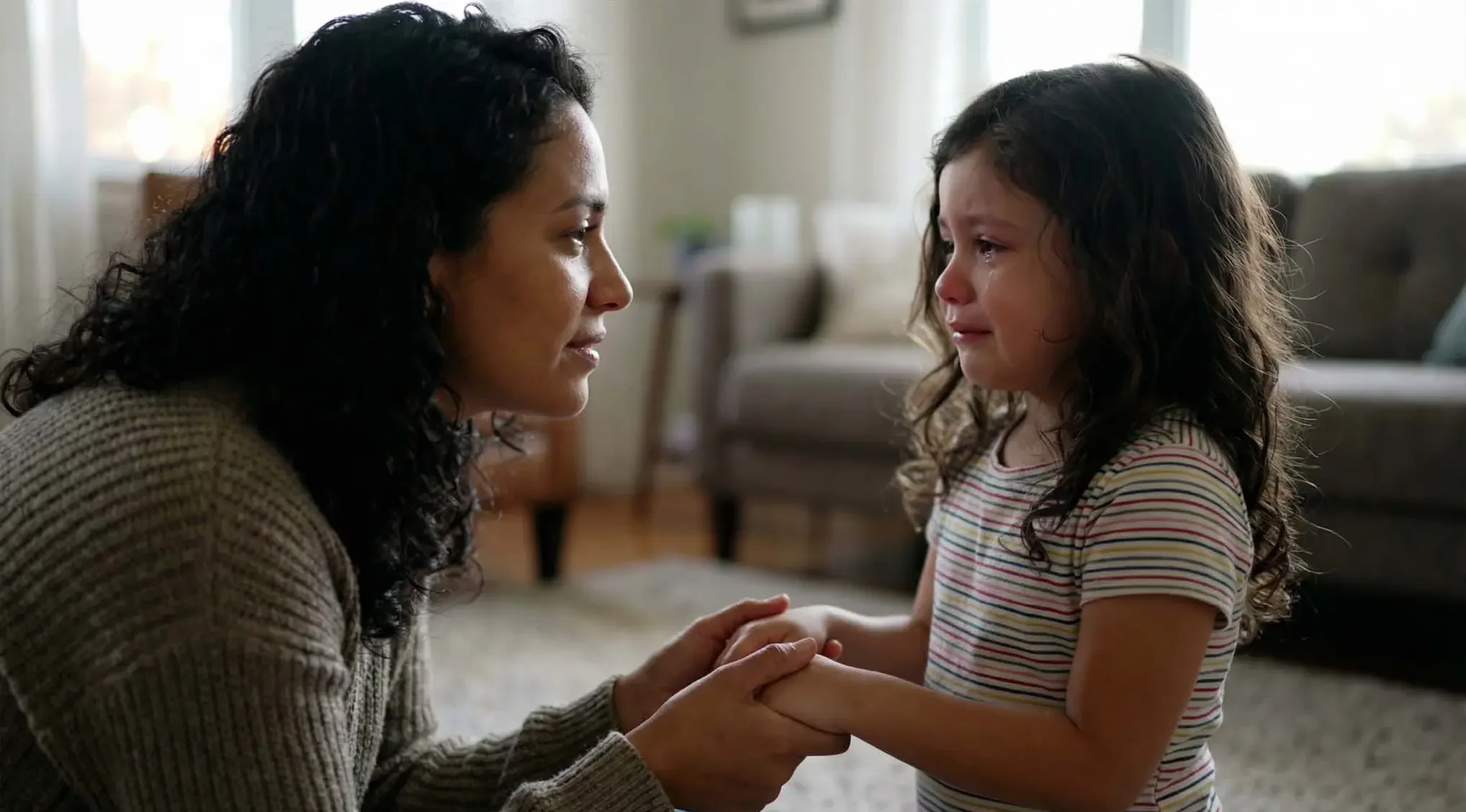
mother holding her daughters hands because she is emotionally upset
ParentingPublications

When Kids Don’t Have the Words: How to Help Children Express Big Feelings

D’Veal Communication Team

There’s a moment almost every parent has lived through.

Your child completely falls apart — over a broken crayon, the wrong color cup, a homework assignment, or a sideways glance from a sibling. The reaction is enormous. The situation feels minor. And you’re standing there wondering what on earth just happened.

Here’s what most children can’t yet tell you: “I don’t have the words for what I’m feeling.”

That gap between the size of the emotion and the language to express it is at the heart of almost every meltdown, outburst, and shutdown you’ll witness as a parent. Understanding it changes everything.

Why Children Communicate Through Behavior

Children experience the full spectrum of human emotion — disappointment, shame, jealousy, fear, loneliness, embarrassment. The difference between a child and an adult isn’t the depth of feeling. It’s the vocabulary to name it.

When kids don’t have words, they use behavior. A slammed door is a sentence. A stomachache before school is a paragraph. Silence from a usually talkative child is a whole chapter.

When a child says “I don’t care”, they might actually mean “I’m embarrassed”, “I’m afraid I’ll fail”, or “I feel completely left out”. Without emotional language, feelings don’t shrink — they overflow. And overflow looks like behavior.

This is why the better question isn’t “Why are you acting like this?” but “What is this behavior trying to tell me?”

The Science Behind Naming Emotions

Emotional language isn’t just a soft skill. Research in child development consistently shows that children who can label their emotions are significantly better at regulating them. Brain imaging studies confirm that simply naming a feeling reduces its intensity — neuroscientists call this “affect labeling.”

The difference between a child thinking “I’m bad” versus “I’m feeling frustrated” is enormous. One feels like identity. The other feels like a temporary state that can change. Giving children emotional vocabulary protects their self-esteem and builds coping skills they’ll rely on for the rest of their lives.

Why “Just Calm Down” Backfires — And What to Do Instead

Telling an overwhelmed child to calm down is a bit like telling someone who’s drowning to just swim. The instruction isn’t wrong — it’s just completely disconnected from what they’re capable of in that moment.

Before a child can regulate, two things need to happen first: connection, then language. Connection communicates “I see you.” Language gives the feeling a name. Regulation — the calm-down part — can only follow those two steps, not precede them.

That’s why validation is so powerful. Phrases like “That makes sense”, “I can see why that hurt”, or “I’d feel frustrated too” aren’t permissive parenting. When a child feels understood, their nervous system settles enough to actually hear you.

Building Emotional Vocabulary at Every Age

Building emotional language looks different depending on where your child is developmentally, but the foundation is the same at every stage: consistency matters more than perfection.

For younger children between ages 3 and 7, keep it simple. Narrate emotions as you observe them — “You look frustrated”, “That was really disappointing, huh?” — and use tools like feelings wheels or emotion-based picture books. Every time you name an emotion alongside an experience, you’re building a library they’ll draw from for years.

For elementary-aged children between 8 and 12, emotions become more layered. This is the ideal time to expand their vocabulary beyond “mad” or “sad” to include words like overwhelmed, embarrassed, nervous, or left out. This age group also benefits from learning that emotions can coexist — that it’s possible to feel excited and nervous at the same time, or proud and scared all at once.

For teenagers, direct emotional conversations often feel intrusive. Indirect questions like “On a scale of 1 to 10, how intense was today?” or “Do you want advice, or do you just want me to listen?” give teens emotional autonomy while keeping the door open.

The Most Overlooked Tool: Your Own Emotional Language

Children don’t learn emotional vocabulary primarily from what we teach them. They learn from what they watch us do.

When you say “I’m feeling overwhelmed, so I need a few minutes” or “I was frustrated earlier, but I talked it through”, you’re demonstrating something no lesson can replicate: that emotions are manageable, not terrifying. That naming them is a sign of strength, not weakness.

You don’t have to be a perfectly regulated parent. You just have to be an honest one.

Start Small Tonight

You don’t need lengthy conversations every evening. Emotional check-ins can be brief and woven naturally into your existing routine — a question at dinner, during a car ride, or at bedtime.

“What was the best and hardest part of your day?” goes a long way.

When check-ins become a habit, children internalize a powerful message: feelings are normal, talking about them is safe, and support is always available. When children know their feelings are welcome, they bring them to you.

And that changes everything.

Need More Support?

At D’Veal Family and Youth Services, we understand that sometimes families need more than daily practices — they need professional guidance, therapeutic support, and a community that gets it.

We offer therapy for children, teens, and families, parent coaching, crisis intervention, and community-based programs designed to meet you where you are and help you move forward together.

Visit www.dveal.org or call (626) 796-3453 to learn more. Let’s keep building emotionally healthy homes — one conversation, one routine, one validated feeling at a time.

Help Us Empower More Families When you support D’Veal, you help fund therapy sessions, school wellness initiatives, cultural events, and outreach programs that bring healing where it’s needed most.

**Make your 2026 gift today at **www.dveal.org/donate

Together, we can make this year a turning point for thousands of children and caregivers. Because healing starts at home.

Parent holding child’s hand while sitting outside
AnxietyMental HealthParentingPublications

Parenting Through Anxiety: Helping Your Child Feel Safe and Heard

By Inger Douglas
Published on May 12, 2025


It’s a typical Monday morning, and Maya is trying to get her 9-year-old son, Jordan, ready for school. The cereal is soggy, the backpack is half-zipped, and Jordan is frozen at the door—tears welling up in his eyes.

“My stomach hurts,” he whispers, clutching it tightly. But Maya has seen this before. There’s no fever, no symptoms… just fear. Again.

Has your child ever said they were “sick” when you suspected it was something deeper? Do you ever wonder if anxiety is hiding behind those morning meltdowns, sleep struggles, or refusal to go to school?

What if their silence is not defiance—but distress?

And what if your calm, present support is exactly what they need to feel safe enough to share what’s really going on?

It’s good to know . . .

Anxiety in children doesn’t always look like worry. Sometimes it shows up as clinginess, anger, stomachaches, or even silence.

As a parent, seeing your child struggle with something you can’t fix with a bandage or a hug can be heartbreaking.

At D’Veal Family and Youth Services, we believe every parent has the ability to support their anxious child—not by having all the answers, but by creating an environment where safety, empathy, and connection are the norm.

Let’s unpack what anxiety really looks like in kids—often hidden behind tummy aches or outbursts—and show how small moments of compassion can create a home where feelings are welcome, not feared.


What Childhood Anxiety Can Look Like

Children, especially younger ones, may not have the words to say, “I’m anxious.” Instead, they express their feelings through behaviors.

Common signs of anxiety in children:

  • Trouble sleeping or frequent nightmares
  • Complaints of stomach aches or headaches
  • Avoidance of school or social events
  • Perfectionism or fear of making mistakes
  • Angry outbursts over small triggers
  • Clinginess or excessive reassurance-seeking

Example:

“My daughter kept saying her stomach hurt every morning before school. I thought it was physical—but it turned out to be anxiety about being away from me”, shared one parent.

Understanding that these behaviors are signals—not defiance—can change the way you respond.

There’s no set time when these “signals” can occur:

Alicia noticed her 7-year-old daughter, Lila, getting more upset each night before bed. First it was the lights being too bright. Then the blankets weren’t “right.”

Then came the tears—night after night. Alicia was exhausted, thinking it was just a phase or a battle over bedtime.

But one night, after gently sitting with her, Lila finally whispered, “What if something bad happens to you while I’m sleeping?”

That’s when Alicia realized: this wasn’t about the lights or the blankets. It was anxiety—showing up as fear, clinginess, and sleepless nights.

Knowing how to recognize these signals is where you and D’Veal team up to work together.


Responding to Anxiety With Support, Not Shame

Children need to feel safe to be vulnerable. That safety starts with how you, as their caregiver, respond when anxiety shows up.

1. Validate Their Feelings

Avoid saying, “You’re overreacting,” or “It’s no big deal.” Instead, try:

  • “That sounds scary. I’m really glad you told me.”
  • “I can see this is hard for you.”

Validation doesn’t mean you agree with their fears—it means you acknowledge their experience.

2. Stay Calm and Grounded

Your calm helps regulate their anxiety. If you respond with panic or frustration, it can escalate their distress. Practice your own coping strategies so you can model emotional control.

Try:

  • Taking slow breaths together
  • Speaking in a softer tone
  • Offering physical comfort if welcomed (a hand on the back, a hug)

3. Create Predictability

Routine helps children feel in control. Predictable mealtimes, bedtime rituals, and morning check-ins can lower anxiety levels.

“We started doing a worry journal every night before bed,” one parent told us. “It helped my son feel heard and helped me understand his inner world.”


What Not to Do

Even with the best intentions, some common parenting responses can accidentally add pressure:

  • Don’t force them into anxiety-inducing situations without support. Gentle exposure is helpful—forced exposure isn’t.
  • Don’t tell them to ‘just stop.’ Anxiety isn’t something kids can shut off.
  • Don’t minimize their feelings. Phrases like “It’s not that bad” can make a child feel dismissed.


How to Talk About Anxiety

Normalize the word “anxiety” in your home. When kids learn it’s okay to talk about mental health, they’re more likely to open up.

Conversation starters:

  • “Sometimes I get nervous too. Do you ever feel that way?”
  • “What’s something that makes your heart beat fast or your tummy feel funny?”
  • “It’s okay to be scared. What can we do to help you feel safe?”


When to Seek Professional Help

If your child’s anxiety is affecting their sleep, school performance, friendships, or overall happiness, it may be time to talk to a therapist. Therapy provides a safe space to explore feelings and learn tools for managing anxiety.

At D’Veal, we offer:

  • Individual therapy for children and adolescents
  • Parent coaching and family therapy
  • School-based mental health services


You Don’t Have to Be a Perfect Parent

Supporting an anxious child doesn’t mean always saying the right thing or never getting frustrated. It means being present, listening, and showing up—even on the hard days.

You’re doing better than you think. And if you need backup, D’Veal Family and Youth Services is here to walk alongside you.


📞 Let Us Help

Is your child experiencing anxiety? D’Veal Family and Youth Services can help. Reach out today to speak with a caring team member and explore our family-centered services.

www.dveal.org | Contact Us | (626) 796-3453

This blog was written by the D’Veal Family and Youth Services Communications Team. For questions, email info@dveal.org.


💙 Support Our Mission

If you would like to support the work being done by D’Veal Family and Youth Services, consider making a tax-deductible donation. Your contribution helps us continue to provide life-changing support to children, youth, and families across our communities.

Together, we can make healing possible—one family at a time.

Donate Now

Family holding hands and walking together at sunset
Family WellnessMental HealthParentingPublications

Healing Together: How Family Support Boosts Mental Wellness

By Inger Douglas
Published on May 8, 2025


Introduction

At D’Veal Family and Youth Services, we often remind families of a simple truth: no one heals in isolation. When a child struggles with their mental health, the support—or lack of support—they receive from home can shape everything about their journey toward wellness.

Mental health isn’t just an individual concern. It’s a family one. Whether it’s a young child dealing with anxiety, a teen navigating depression, or a parent silently overwhelmed—healing happens more effectively when families face it together.


Why Family Involvement Matters

According to the National Institute of Mental Health, family support is one of the most critical protective factors for youth experiencing mental health challenges. Studies show that children who feel emotionally supported by their families are:

  • More likely to respond positively to treatment
  • Less likely to engage in self-harming behavior
  • More likely to develop healthy coping strategies

“When families come together, we see transformation. Not just in the child—but in the household.” – D’Veal Therapist

Support doesn’t mean being perfect or having all the answers. It means being present, consistent, and willing to learn.


What Support Looks Like

  1. Active Listening
    Ask open-ended questions like “How are you feeling today?” or “What was the hardest part of your day?” Let children share without fear of judgment or punishment.
  2. Routine and Stability
    Simple routines help kids feel safe. Consistent mealtimes, bedtime rituals, and family check-ins create a sense of security that supports emotional regulation.
  3. Validation and Encouragement
    Instead of saying, “You’re fine,” try “That sounds really hard—thank you for telling me.” Validating a child’s experience helps them feel seen and understood.
  4. Participation in Therapy
    When parents or caregivers join counseling sessions, it builds trust. It also helps bridge the gap between clinical progress and everyday life at home.


Breaking Generational Barriers

Many parents today are trying to give their children what they never received—space to feel, express, and heal.

“We didn’t talk about mental health growing up,” one D’Veal parent said. “But I want my son to know it’s okay to ask for help.”

Families don’t have to have a perfect blueprint. What matters most is creating an environment where children know they can be honest, supported, and loved—especially when they’re struggling.


A Real Story of Healing Together

A 13-year-old girl was referred to D’Veal after a series of panic attacks at school. Initially, her parents felt helpless and unsure of how to support her.

Through family therapy sessions, her parents learned how to respond to her anxiety with compassion instead of frustration. They created new family routines, practiced calming techniques together, and—most importantly—began truly listening to one another.

Six months later, their daughter is thriving academically and socially. But perhaps most powerful of all, her family is closer than ever.

Note: This is a representative story inspired by the types of family experiences D’Veal Family and Youth Services encounters. Details have been adapted to protect privacy.


How D’Veal Family and Youth Services Supports Families

At D’Veal, we believe healing is a family journey. Our services are designed to involve parents, caregivers, and siblings in age-appropriate ways:

  • Family therapy sessions that focus on connection, communication, and understanding
  • Parent coaching to help caregivers develop confidence in supporting their child’s needs
  • Crisis intervention for families experiencing acute emotional distress
  • Ongoing education and community resources to build mental health literacy


Final Thoughts

If your child is struggling, remember: you don’t have to fix it all alone. Your love, consistency, and willingness to learn go a long way.

And you don’t have to walk this journey by yourself.


📞 Let Us Help

D’Veal Family and Youth Services is here to support your entire family. Reach out today to schedule an appointment or learn more about how we can walk alongside you.

www.dveal.org | Contact Us | (626) 796-3453


💙 Support Our Mission

If you would like to support the work being done by D’Veal Family and Youth Services, consider making a tax-deductible donation. Your contribution helps us continue to provide life-changing support to children, youth, and families across our communities.

Together, we can make healing possible—one family at a time.

Donate Now
This article was written by the D’Veal Family and Youth Services Communications Team. For questions, email info@dveal.org.