
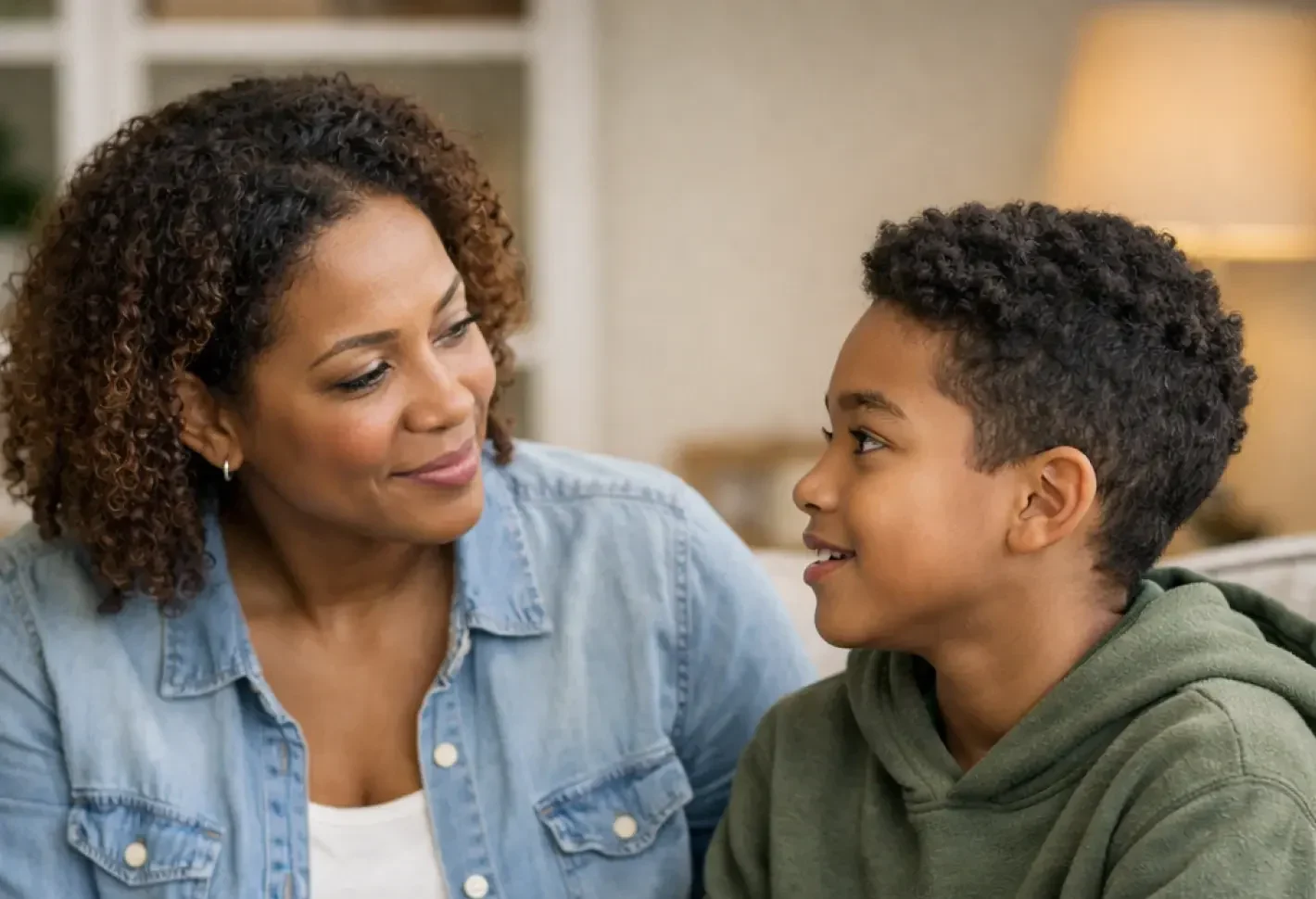
A parent and child sitting together outdoors during summer, looking relaxed and connected
Family SupportPublications

Summer Is Here. Is Your Child Okay? | D’Veal Family and Youth Services

D’Veal Communication Team

Maria had big plans for summer.

No more early mornings. No more homework. Just rest, family time, and fun.

But two weeks after school ended, Maria called D’Veal Family and Youth Services. The call came with tears.

Her ten-year-old son had changed. Sleep was not coming easily. Anger came quickly. A quiet had settled in — but not the peaceful kind.From the outside, everything looked fine. School was out. A child should have been happy, right?

But something was wrong.

Maria’s story is not unusual. D’Veal hears it every June.

Why Summer Can Be Hard for Kids

Most people think summer is easy for children. No school. No homework. Lots of free time.

But for many kids, school does more than teach. School gives children a schedule, a

social life with friends to see every day and trusted adults who check in on them. It also

provides a reason to get up, get dressed, and show up somewhere.

When the school year ends, all of that stops at once.

For most children, that is okay. Some children adjust and find things to do. Most children

enjoy and welcome the break.

But some children struggle when that structure disappears. This is especially true for

children who already deal with worry, fear, or family stress. Without the routine of

school, things that were manageable can become harder. Feelings that were easier to

carry during busy school days can feel heavier in the quiet of summer.

“When the school day ends for summer, some children feel lost — not free.”

Summer is not the problem. The missing structure is.

And when a child does not have the words to explain that feeling, the feeling shows up

in other ways — in behavior, in mood, in sleep, in silence.

This does not mean summer is bad. It just means some children need a little more

support to get through it.

Signs Your Child May Need Support

Parents and caregivers do not have to wait for a crisis to pay attention. Small signs

matter. Early action helps.

Here are some things to watch for during the summer months. These signs may mean a

child is struggling:

• Getting upset or angry more than usual — and it lasts for more than two weeks

• Stopping activities that used to bring joy

• Pulling away from friends or avoiding social time

• Trouble falling asleep, staying asleep, or sleeping much more than usual

• Complaining about stomachaches or headaches when a doctor says the body is fine

• Getting very upset when small plans change

These signs do not mean something is broken. They’re signs a child is having a hard

time and needs some help.

Children do not always have words for how they feel. So these feelings come out

through behavior instead.

When these signs appear, pay attention. Trust what is being seen.

A child who is withdrawing, snapping, or shutting down is not being difficult on purpose.

When a child is in that place, he/she is asking for help in the only language available at that moment.

You Don’t Have to Wait for a Crisis

Many families think support only makes sense when things get very bad. Many families

wait, hoping the behavior will pass on its own.

Sometimes it does. But waiting too long can turn small struggles into bigger ones.

The best time to reach out is early — before small problems grow into large ones.

Before a child feels like something is wrong with them. Before a parent feels like the

only option is to manage alone.

At D’Veal, the work happens right where families live. D’Veal staff can come to a home,

a child’s school, or a place in the community. There is no need to drive to an office.

There is no waiting room.

D’Veal meets families where they are. Because that is where real help happens.

“You do not have to figure this out alone. That is why D’Veal is here.”

What D’Veal’s Support Looks Like

D’Veal Family and Youth Services has been helping children and families in the San

Gabriel Valley since 1993. That is more than 30 years of showing up for families who

needed someone in their corner.

D’Veal’s staff are trained and licensed. Work happens with children one-on-one. Work

also happens with whole families together.

D’Veal helps children learn how to talk about feelings. D’Veal helps parents and children

understand each other better. And when things get hard fast, D’Veal is there for families

in crisis too.Support looks different for every family. For one family, it might mean a therapist visiting

the home twice a week to work with a child directly. For another family, it might mean a

specialist helping parents learn new ways to respond when big emotions show up. For

another, it might mean crisis support on a night when everything feels like too much.

D’Veal does not offer one-size-fits-all solutions. D’Veal offers real help for real families,

built around what each family actually needs.

One mother shared that managing her son’s struggles alone had gone on for three

summers. The situation did not feel “big enough” to ask for help.

After six weeks with D’Veal, that son started the school year with tools that had not been

there before. And that mother felt like a partner in the process — not someone carrying

it all alone.

A Better Summer Is Possible

Maria’s son is doing better now.

A trusted therapist is part of the picture. Maria now knows how to read the signs and

how to respond. The whole family feels less alone.

Summer can still be hard sometimes. But summer can also be a time of real growth —

for children and for the adults who love them.

The difference is usually support.

If a child is struggling this summer — or if being proactive feels right — please reach

out. There is no reason to wait.

Help a Family This Summer — Make a Donation

Many of the families D’Veal serves do not have a lot of money. Some are dealing with

poverty, past trauma, and big challenges — on top of trying to help their children.

A donation to D’Veal helps reach those families.

Every gift to D’Veal helps pay for:

• Therapy for children who need it

• Support for families during hard moments

• Training for the staff who go into homes and communities

Every gift matters. Every gift reaches a real family.
The Mental Health Habits Nobody Talks About featured img
Publications

The Mental Health Habits Nobody Talks About (But Every Family Needs)

D’Veal Communications Team

It happened again last Tuesday.

My daughter walked through the door after school, dropped her backpack with that particular thud I’ve come to recognize, and went straight to her room without a word. Not angry. Not dramatic. Just… quiet.

Five years ago, I would have let it go. Told myself she needed space. Maybe checked on her later, asked if she wanted a snack.

But here’s what I’ve learned working with families at D’Veal Family and Youth Services: those quiet moments? They’re not nothing. They’re everything.

Mental wellness doesn’t grow in therapy offices alone. It grows in Tuesday afternoons. In kitchen conversations. In the two minutes before bedtime when you ask one simple question.

And the families who get this right? They’re not doing anything revolutionary. They’re doing five small things, consistently, that most people overlook.

Let me show you what those are.

1. Ask the Question Nobody’s Really Asking

“How was your day?” is not a real question.

I know, I know. We all ask it. But when’s the last time that question got you more than “fine” or “good”?

Here’s what I started asking instead: “How are you feeling right now?”

Not “how was” — how ARE.

That shift from past tense to present tense? It changes everything. You’re not asking for a report anymore. You’re asking them to pause, check in with themselves, and trust you with what they find.

My eleven-year-old used to shrug off most questions. But when I started asking how she was feeling — not how her math test went or whether practice was fun — something shifted. She started answering. Really answering.

“I’m feeling stressed about Friday.”

“I’m actually kind of excited but also nervous.”

“Honestly? Tired. Really tired.”

For younger kids who can’t always name what they’re feeling, try a feelings chart with faces. Point to one together. Make it a game. The point isn’t perfection — it’s opening the door.

Because when you ask that question regularly, you’re sending a message louder than words: Your feelings matter here. You’re safe to share them. I can handle whatever you bring me.

That’s not therapy. That’s Tuesday. But it’s also how emotional safety gets built — one honest answer at a time.

2. Build a Rhythm They Can Count On

I used to think routines were boring.

Then I met a mom whose teenage son had been struggling with anxiety. She told me about their Sunday pancake tradition — nothing fancy, just the two of them flipping pancakes and talking before the week started. They’d been doing it for three years.

“It’s the only time he really opens up,” she said.

That’s when it clicked for me. Routines aren’t boring — they’re anchors.

The world our kids navigate is chaotic. School drama. Social media. Friend groups that shift like sand. Expectations that feel impossible. In all that noise, predictable moments become sacred.

Research backs this up. Studies show that consistent family routines reduce anxiety, improve sleep quality, and help kids regulate their emotions. But beyond the science, there’s something deeper: routines tell your kids you’re reliable. They know what to expect from you. They know you’ll show up.

It doesn’t have to be elaborate. Maybe it’s bedtime stories. Friday movie nights. Morning walks together. Lighting a candle at dinner. What matters is that it’s consistent and that it’s yours.

My family? We do “highs and lows” every night at dinner. Everyone shares the best and worst part of their day. Some nights it’s deep. Some nights my son’s “low” is that his sandwich was soggy. But we do it anyway.

Because showing up matters more than saying the perfect thing. And kids who know their parents will show up? They feel safer taking risks, making mistakes, and asking for help when they need it.

3. Stop Trying to Fix Everything

This one’s hard. I’m not going to sugarcoat it.

When your kid comes to you upset, every instinct in your body wants to make it better. Fast. You want to solve the problem, minimize the pain, rush them through the feeling to the other side where everything’s okay again.

So we say things like: “You’re fine.”

“It’s not that bad.”

“Don’t cry — you’ll be okay.”

We mean well. But here’s what kids hear: Your feelings are wrong. This isn’t a big deal. You’re overreacting.

I learned this the hard way with my son. He’d come home frustrated about something — a friend, a grade, a coach’s comment — and I’d jump straight into problem-solving mode. “Well, did you try this? What if you did that?”

One day he finally said it: “Mom, I don’t need you to fix it. I just need you to listen.”

That hit me hard. Because he was right.

Validation isn’t agreement. You don’t have to think the problem is huge to acknowledge that it feels huge to them. You don’t have to have answers. You just have to be present.

Try this instead:

“That sounds really hard.”

“I can see this is upsetting you.”

“Thank you for telling me. I’m here.”

Watch what happens when you do this. The crying doesn’t last longer — it actually resolves faster. Because kids don’t need us to take away their feelings. They need us to make space for them.

When emotions are validated, they pass through naturally. When they’re suppressed or dismissed, they get stuck.

Your home should be the one place where feelings don’t have to be justified or defended. Where sadness is allowed. Where anger isn’t shameful. Where disappointment doesn’t need to be rushed through.

That’s the foundation of mental wellness — teaching kids that all feelings are okay, even the uncomfortable ones.

4. Turn Gratitude Into a Real Practice (Not Just a Hashtag)

Full disclosure: I used to roll my eyes at gratitude practices.

They felt like something people posted about on social media with pictures of sunsets and coffee cups. Pretty. Vague. Not exactly practical when you’re trying to get three kids fed, homework done, and everyone in bed before meltdown hour.

Then I read the research.

Turns out gratitude isn’t just a feel-good concept. It’s one of the most researched psychological interventions we have. Regular gratitude practice is linked to lower stress levels, better sleep, stronger relationships, and improved emotional resilience. It literally rewires the brain to notice positive experiences more easily.

So I tried it.

We started doing “Three Good Things” every night before bed. Each person names three things that went well that day. They can be big or tiny — doesn’t matter.

At first, my kids groaned. “Do we have to?”

But after a few weeks, something shifted. They started looking for good things during the day so they’d have something to share at night. They started noticing moments they would have missed before.

“I got to sit with my friend at lunch.”

“The library had that book I wanted.”

“We had pizza for dinner.”

Simple stuff. But that’s the point.

Gratitude isn’t about denying hard things or pretending everything’s perfect. It’s about training your brain to hold both realities at once: life can be difficult AND there are still good moments worth noticing.

For kids who struggle with anxiety or negative thinking patterns, this practice is especially powerful. It doesn’t erase their worries, but it gives them a counterbalance — a way to remember that good things exist too.

Try it for a month. Make it as easy as possible. Do it at dinner, in the car, wherever works. Just be consistent.

You might be surprised how much it changes the tone of your home.

5. Show Them How It’s Done

Here’s the truth nobody tells you about raising emotionally healthy kids: they don’t learn it from what you say.

They learn it from watching you.

You can talk all day about the importance of managing stress, setting boundaries, and asking for help. But if your kids never see you actually do those things? The lesson doesn’t land.

I realized this during a particularly overwhelming week last fall. Work was intense, the house was a disaster, and I was running on four hours of sleep and too much coffee. My daughter asked me something minor, and I snapped at her.

She didn’t say anything. Just looked at me.

And I realized: if I want her to know it’s okay to be overwhelmed and ask for help, I need to model that. Out loud. In real time.

So I stopped and said, “I’m sorry I snapped. I’m feeling really stressed right now, and I didn’t handle that well. I think I need to take a walk and reset.”

Then I actually did it. I walked around the block for ten minutes.

When I came back, she asked, “Does that help? Walking when you’re stressed?”

“Yeah,” I told her. “It really does.”

That’s modeling. Not perfection — but honesty. Not hiding your struggles — but showing how you work through them.

Try narrating your coping strategies:

“I’m going to take some deep breaths — that helps me calm down.”

“I need to say no to that event. I’m feeling stretched too thin.”

“I’m going to call your aunt tonight. I need someone to talk to.”

When kids see adults taking care of their mental health, it normalizes it. It makes emotional wellness something you DO, not just something you talk about.

And here’s the bonus: taking care of yourself makes you a better parent. You have more patience. More energy. More presence.

You can’t pour from an empty cup. But you can show your kids what it looks like to refill it.

The Small Stuff Is the Big Stuff

Mental wellness doesn’t happen in grand gestures or perfect moments.

It happens in the accumulation of small things: the question you ask after school, the routine you honor even when you’re tired, the feelings you validate instead of dismiss, the gratitude you practice together, the self-care you model when nobody’s watching.

These habits won’t make everything perfect. Your kids will still have bad days. They’ll still struggle. So will you.

But here’s what these practices do: they build a foundation. A sense of safety. A toolkit for hard times. And a family culture where emotional wellness isn’t just addressed in crisis — it’s nurtured every single day.

You don’t need to be perfect. You don’t need to do all five things at once. Just pick one. Start there.

Maybe tonight, you ask how your child is feeling. Maybe this weekend, you start a new routine.

Maybe tomorrow, you validate a feeling instead of fixing it.

Small steps. Repeated consistently. That’s how healing happens. That’s how strong families are built.

One Tuesday at a time.

Need More Support?

At D’Veal Family and Youth Services, we understand that sometimes families need more than daily practices — they need professional guidance, therapeutic support, and a community that gets it.

We offer therapy for children, teens, and families, parent coaching, crisis intervention, and community-based programs designed to meet you where you are and help you move forward together.

Visit www.dveal.org or call (626) 796-3453 to learn more.

Let’s keep building emotionally healthy homes — one conversation, one routine, one validated feeling at a time.

Help Us Empower More Families

When you support D’Veal, you help fund therapy sessions, school wellness initiatives, cultural events, and outreach programs that bring healing where it’s needed most.

**Make your 2026 gift today at **www.dveal.org/donate

Together, we can make this year a turning point for thousands of children and caregivers. Because healing starts at home.

Multigenerational family walking through a sunny park holding hands and smiling
Publications

New Year, New Hope: Starting 2026 with Mental Wellness at Home

By D’Veal Family and Youth Services Communications Team
Published: January 9, 2026


A Fresh Start Rooted in Family Healing

As we step into a brand new year, many of us feel a quiet call to do things differently—to grow, to reconnect, and to build stronger, healthier homes. At D’Veal Family and Youth Services, we believe that healing doesn’t start in a therapist’s office alone. It begins at the kitchen table, in the morning routines, and in the loving moments between caregivers and children.

2026 presents more than a date on the calendar. It brings with it the opportunity to pause, re-center, and prioritize what truly matters: mental wellness at home. We’re not talking about setting rigid resolutions or chasing perfection. We’re talking about building everyday habits that nurture emotional strength and deepen family connection.

Because when a family is well, the entire community grows stronger.

Why January is a Mental Health Reset for Families

The start of the year often comes with both hope and emotional heaviness. The holidays can stir joy but also stress, grief, and financial strain. Children and teens, in particular, may feel overstimulated, disconnected from routine, or anxious about returning to school.

That’s why January is the perfect time to check in—not just with your goals, but with your feelings. According to the National Alliance on Mental Illness (NAMI), the winter months can increase symptoms of anxiety and depression, especially among youth. At D’Veal, we recognize that these shifts in energy and emotion aren’t just seasonal quirks. They’re signs. Invitations to slow down and invest in emotional well-being.

By making mental health a family priority early in the year, you’re creating space for resilience, stability, and togetherness that lasts far beyond January.

Everyday Ways to Nurture Mental Health at Home

Mental wellness doesn’t require dramatic change. The most powerful healing often begins with small, intentional steps. Here are some family-centered practices you can try this month:

Start the Morning with Heart Rather than jumping into commands, pause and connect:

“How are you feeling today?” “Anything you’re excited or nervous about?”

This emotional check-in teaches children that their inner world matters and creates emotional safety before the day even begins.

Create a Peaceful Space Whether it’s a reading nook, a “calm corner,” or a shared spot on the couch—dedicate a space for winding down. Let your child personalize it with favorite books, music, or comfort items. It signals that home is a refuge.

Rebuild Rituals & Routines After the unpredictable energy of the holidays, kids crave structure. Simple routines—consistent bedtimes, shared meals, and tech-free hours can bring deep emotional stability. These daily rituals anchor your family in predictability and care.

Celebrate the Everyday Victories Did your child try something new? Help a sibling? Show kindness? Celebrate it. Reinforce the behavior you want to see with warmth and recognition, not just when it’s perfect but when it reflects effort and growth.

Reconnect with Culture and Tradition Honor your family’s roots. Whether it’s cooking ancestral meals, playing traditional music, or storytelling—these cultural rituals ground children in identity, pride, and resilience. At D’Veal, we champion culturally rooted healing because we know how vital it is to well-being.

What Sets D’Veal Apart

For over 30 years, D’Veal Family and Youth Services has stood as a trusted, culturally responsive mental health partner for families across Southern California. We understand the emotional landscape families navigate today. And we know how to guide you through it—with respect, with skill, and with compassion.

Our clinicians and care teams don’t just offer services. We offer solutions rooted in cultural competence, empathy, and lived experience. Whether you’re facing behavioral challenges at school, emotional withdrawal at home, or the everyday pressures of parenting—we walk with you.

Because mental health isn’t just a clinical issue. It’s a community one. And our mission is to build stronger families to uplift stronger communities.

D’Veal Services: Built to Empower

Our holistic programs include:

  • Individual & Family Counseling: Tailored support for children, teens, and their families facing anxiety, behavioral challenges, grief, or trauma.
  • Parent Coaching & Support Groups: Empowering caregivers with tools to strengthen relationships and respond to their child’s needs with confidence.
  • Crisis Intervention Services: Providing rapid response and support during mental health emergencies.
  • School-Based Behavioral Health: Bringing mental wellness directly into schools for accessible, stigma-free support.

We don’t just treat symptoms. We build understanding. We foster healing. We create change.

A Family-Centered Vision for 2026

Let 2026 be the year we say:

“Mental wellness is not a luxury. It’s essential.”
“We can create emotionally safe homes.”
“We are not alone on this journey.”

At D’Veal, we believe in meeting families where they are—with culturally responsive care, deep compassion, and a community-rooted approach to mental wellness.

You Don’t Have to Do It Alone

If your child is struggling—or if you are struggling to support them, you are not failing. You’re human. And there is help.

Reach out to D’Veal and discover how our family-focused services can offer the support, guidance, and resources your home needs.

Call us at (626) 796-3453

**Explore services at **www.dveal.org

Serving families across Southern California with dignity, warmth, and trust

Help Us Empower More Families

When you support D’Veal, you help fund therapy sessions, school wellness initiatives, cultural events, and outreach programs that bring healing where it’s needed most.

**Make your 2026 gift today at **www.dveal.org/donate

Together, we can make this year a turning point for thousands of children and caregivers. Because healing starts at home.

Youth dancing at a summer cultural festival
Publications

Freedom to Heal: Self-Care, Culture & Mental Health During Summer

By Inger Douglas and D’Veal Communications Team
Published on May 28, 2025


Summer is a time that speaks of freedom—the freedom from school routines, the freedom to explore outdoors, and the deeper freedom to reconnect with ourselves and our communities. For many children, youth, and families in our diverse Southern California communities, summer is not just a season—it’s a sacred time for healing. And it’s a great time to reconnect with loved ones. At D’Veal Family and Youth Services, we believe that mental wellness is deeply tied to cultural identity, community support, and intentional self-care, especially during this sun-soaked season of renewal.


The Summer Shift: Why This Season Matters

So why the focus on summer self-care? Well, in the rush of everyday life, mental health can easily take a backseat. Let’s face it, most of us do put mental behind everything else. School stress, work demands, and constant obligations can weigh heavily on the emotional well-being of young people and their caregivers. But summer gives us a chance to pause, to breathe, and to realign with what truly matters.

Longer days and warmer weather invite more time outdoors, more space for movement, and more moments for joy. And where there is joy, there is healing. Whether it’s dancing barefoot at a block party or finding solace under a shady tree, summer offers moments where our bodies and minds can feel free. It could be something as simple as running through the sprinkler. Don’t over complicate finding joy – you can find it in the simplest of places and activities.


The Power of Culturally Rooted Self-Care

At D’Veal, we honor the rich cultural traditions of the families we serve. We know that healing doesn’t look the same for everyone. For some, it may come through storytelling circles passed down through generations. For others, healing is found in spiritual practices, ancestral foods, or vibrant community festivals.

Culturally rooted self-care means leaning into what uplifts and grounds you. It’s:

  • Attending a Juneteenth celebration and feeling pride in your heritage.
  • Cooking soul food with your grandmother and sharing laughter.
  • Singing hymns or drumming with your community as a form of release.
  • Practicing rituals or ceremonies that connect you to your identity.

Self-care isn’t just bubble baths and yoga—it’s reclaiming traditions, spaces, and joy that have always been part of your story.


Youth and Summer Mental Wellness

While many youth look forward to the break summer provides, unstructured time can also increase feelings of isolation, especially for those who struggle with anxiety, depression, or trauma. That’s why summer self-care for youth should be proactive, accessible, and grounded in belonging.

Here are some practical ways youth can care for their mental health during summer:

  • Daily check-ins: Journaling, art, or even voice memos help track emotions and create routine.
  • Stay active: Whether through sports, dance, or nature walks, movement helps release stress.
  • Creative expression: Music, painting, poetry—let summer be a time of creation.
  • Connect with mentors: Reach out to trusted adults, coaches, or counselors for guidance.
  • Digital detox: Set limits on social media to reduce anxiety and comparison.

And a note to the parents and caregivers, this goes for you as well. Participating in some of these activities with your young one can be great fun, strong bonding, and positive new memories of things you do together.


Community as Care

Healing doesn’t happen in isolation. In many Black and Brown communities, mental wellness is collective. Summer is the perfect time to nurture that communal strength.

Family barbecues, neighborhood festivals, church events, and school reunions—these are more than fun gatherings. Take advantage of what your community has to offer during these summer months. They are spaces where support systems grow stronger, wisdom is shared, and hope is renewed.

D’Veal Family and Youth Services often partners with local organizations and faith-based groups to host wellness events, cultural celebrations, and back-to-school readiness programs. These initiatives don’t just prepare kids for the school year—they remind every family that they are not alone.


Creating a Summer of Healing at Home

You don’t have to go far to create a summer of healing. Here are a few ways families can prioritize mental wellness at home:

  • Family check-ins: Make space for weekly conversations about feelings, needs, and celebrations.
  • Cultural storytelling: Share family history, recipes, or traditions that build pride and identity.
  • Create a calm space: A small corner with blankets, books, or calming objects can become a haven.
  • Celebrate small wins: Whether a child finishes a book or helps a sibling, acknowledge their efforts.
  • Explore local resources: Many cities offer free or low-cost programs for youth enrichment and mental health support.


Let Summer Be a Sanctuary

At D’Veal, we say: “Healing is possible with the right support.” Summer is a natural ally in that journey. It allows us to reflect, restore, and reimagine what wellness can look like for each family, rooted in who they are.

Let’s embrace this season with intention. Let’s reclaim summer not just as a break—but as a bridge to deeper connection, stronger community, and greater freedom to heal.


📞 Let Us Help

D’Veal Family and Youth Services is here to support your entire family. Reach out today to schedule an appointment or learn more about how we can work together.

www.dveal.org | Contact Us | (626) 796-3453


💙 Support Our Mission

If you would like to support the work being done by D’Veal Family and Youth Services, consider making a tax-deductible donation. Your contribution helps us continue to provide life-changing support to children, youth, and families across our communities.

Donate today at www.dveal.org

Together, we can build a community where every child feels safe, seen, and supported. Call us at (626) 796-3453. Let us know how we can help.

Empowering Families. Strengthening Communities. Together for Mental Wellness.

Youth smiling with family at a summer cookout/picnic
Publications

Summer Self-Care for Youth: Beyond Bubble Baths and Breaks

By Inger Douglas and D’Veal Communications Team
Published on May 25, 2025


Summer carries a special kind of magic. The days stretch longer. The air feels lighter. Anything seems possible.

For kids and teens, summer is one of the few times they can hit pause on school stress and just breathe—it’s a chance to slow down, feel free, and recharge in their own way. But as freeing as it can feel, summer can also bring some challenges—especially for youth dealing with emotional overwhelm, trauma, or mental health concerns.

At D’Veal Family and Youth Services, we see summer self-care as so much more than candles and quiet time. It’s about real healing—rooted in family, community cookouts, shared stories, and the traditions that remind us who we are.

It’s self-care that speaks our language, celebrates our culture, and brings us back to what really matters.


Check out this story of Zion

Zion is 14 and just wrapped up his first year of high school. He’s funny, curious, and loves sketching sneaker designs. But he’s also been quietly battling anxiety.

With school out for summer, Zion’s parents hoped the break would bring relief—but instead, he started sleeping most of the day, barely touching his sketchpad, and isolating from his friends.

Through D’Veal’s summer programming, Zion’s family learned how unstructured time can feel overwhelming without healthy tools in place.

Together, they created a “Summer Flow List”—daily check-ins, creative time, outdoor play, and digital limits. Slowly, Zion began coming back to himself—first with a doodle, then a full design, and eventually a smile.

Self-care doesn’t always make a big splash. Sometimes, it’s just a quiet reminder to yourself: “I still matter.”


What Does Self-Care Really Look Like for Youth?

Youth self-care isn’t one-size-fits-all. And while bubble baths and screen breaks may help some, deeper, more holistic care involves:

  • Safe expression: Art, dance, music, journaling, or just talking it out.
  • Rhythm and routine: Gentle schedules provide comfort during a season that can feel chaotic.
  • Connection: Bonding with family, mentors, or community members creates protective mental health buffers.
  • Joyful movement: Whether it’s dancing in the living room or walking with grandma, movement reduces anxiety and boosts mood.
  • Technology boundaries: Mindful media use helps reduce comparison fatigue and supports emotional regulation.

Self-care for youth doesn’t have to be complicated—it just needs to be real.

Think of it like creating a daily rhythm that feels safe and uplifting.

When a child paints their feelings, dances out their stress, or writes in a journal, they’re not just passing time—they’re processing life in powerful, healing ways.

Gentle routines like morning check-ins or a bedtime playlist give young minds a sense of calm in a world that often feels unpredictable.

Connection is just as important: talking to a trusted adult, laughing with cousins, or helping grandma in the kitchen—these simple bonds build emotional strength.

Even joyful movement, like shooting hoops or dancing in the living room, can lift moods and ease anxiety. And let’s not forget screen time—taking breaks from scrolling helps kids tune into themselves instead of comparing to others.

Sometimes, I’ll put on my favorite music and start singing around the house. Lol. It just makes me feel good/happy. I might even start dancing.

These practices aren’t hard—they’re human. And they make self-care feel not only doable but deeply worth it.


The Power of Cultural Self-Care

Healing looks different in every home. In many Black and Brown families, wellness is not separated from culture—it’s braided into tradition, storytelling, and community care.

Think of Jada’s summer…

Jada, 16, started attending her auntie’s weekly Sunday dinners again—something she stopped doing after her father passed away. Over collard greens and cousin jokes, Jada began feeling something she hadn’t felt in months: belonging. Her auntie’s stories of resilience became her roadmap for healing.

Culturally rooted self-care is not about retreating—it’s about remembering.

Some ways to nurture culture-rich self-care:

  • Attend community festivals and cultural events
  • Cook family recipes with elders
  • Share oral histories or traditions with the next generation
  • Reconnect with spiritual or ancestral practices

I’m betting you were probably already doing some of these things and didn’t realize they were a part of self-care.

Still with me?

Then, you’re probably wondering what this looks like in real time? How doable is it for me? Will my busy schedule allow me to fit any of this in?

If you’re having the above thoughts, check out some of the ideas below. Remember, it doesn’t have to be perfect.


Let’s Get Real: It’s Okay If It’s Messy

Self-care isn’t perfect, and neither are we. Parents and caregivers: you don’t need to be experts—you just need to be present.

Try these family-friendly summer self-care ideas:

  • “3 Good Things” Challenge: Each night, name three good things about the day.
  • Feelings Hour: Once a week, let each family member share highs and lows.
  • Joy Jar: Write down fun, free activities. Pull one each weekend.
  • Gratitude Walks: Go for walks where everyone shares something they’re thankful for.

Even when schedules slip or tempers flare, these small moments build emotional safety over time.

And that’s what we want, right?


Healing Together, Not Alone

At D’Veal, we know that youth thrive when their families and communities are engaged in their healing. Whether through our culturally sensitive therapy programs, mentorship opportunities, or local partnerships, we aim to meet families right where they are.

Because healing is not a solo act—it’s a family rhythm, a community drumbeat.


The Story of Summer for “The Johnsons”

The Johnson family—mom, dad, and two boys ages 9 and 13—struggled through a rough school year filled with behavior referrals and stress. They came to D’Veal overwhelmed and unsure.

This summer, they started simple: evening check-ins, Saturday cookouts with neighbors, and weekly storytelling nights led by grandpa. Over time, laughter returned. The boys began opening up more. The household didn’t become perfect—but it became more peaceful.

Sometimes healing looks like passing the potato salad and making room for new conversations.


Want to Help More Families Find Their Summer Healing?

🌟 Your support matters.

Every gift to D’Veal Family and Youth Services helps:

  • Fund free and low-cost mental health care for youth
  • Host cultural wellness events and family programs
  • Provide community education on emotional wellbeing
  • Train culturally responsive mental health professionals


👉 Donate today at www.dveal.org

Together, we can build communities where every child feels safe, every family feels supported, and healing is possible—one summer at a time.

Reach out today to speak with a caring team member and explore our family-centered services.

www.dveal.org | Contact Us | (626) 796-3453

Black family gathered in a park on a sunny day, smiling and connecting through shared cultural traditions.
Publications

Freedom to Heal: Reclaiming Summer for Mental Wellness & Cultural Connection

By Inger Douglas and D’Veal Communications Team
Published on May 15, 2025


A Season to Exhale: Why Summer is a Time to Reconnect and Restore

At D’Veal Family and Youth Services, we believe summer is more than just time off from school—it’s a chance to slow down and reset.

For many of us, this season brings back memories of good food on the grill, kids laughing in the yard, music playing at block parties, and stories being passed around under the stars.

It’s a time when we get to come back to what matters most: family, culture, joy, and peace of mind.

Summer has a gentle way of reminding us of something we often forget:

  • You don’t always have to be in “go mode” to be doing enough.
  • It’s okay to slow down. To take a break. To focus on your peace and your people.
  • This season gives us permission to step back from the hustle, check in with ourselves, and reconnect with those we love.

It’s more than time off—it’s a chance to reconnect with yourself and the people who matter most. A moment to rest, rebuild your energy, and heal—together.


Rest, Reconnect, Restore: The Power of Summer Break

Life moves fast—between school, work, and everyday responsibilities, it’s easy for mental health to take a back seat.

But summer gives families a chance to slow down and catch their breath. And in that pause, something beautiful can happen: we start to feel whole again.

Summer makes room for the little things that matter most, like:

  • Sharing meals outside and catching up with loved ones
  • Dancing, walking, or just playing together without a schedule
  • Laughing at family reunions or local festivals
  • Resting under a tree with no rush to be anywhere

These simple moments may not seem like much—but they help us heal.

Healing doesn’t always come from a therapist’s office.

Sometimes, it starts right at home—in our families, in our communities, and in the traditions that remind us who we are.


Traditions That Heal: Finding Wellness in What We’ve Always Known

At D’Veal, we understand that for many families, self-care isn’t about fancy routines or trending apps.

It’s about returning to the everyday traditions that have always helped us feel whole—things passed down from our families, our cultures, and our communities.

Check out these examples of the self-care and what it might look like:

  • Cooking soul food with your grandmother while swapping stories and laughter in the kitchen.
  • Joining a cultural festival in your neighborhood that fills your heart with pride.
  • Singing hymns at church or drumming with your community, finding peace and power in the rhythm.
  • Telling family stories, flipping through photo albums, or teaching a younger relative how to make a special dish.

These aren’t just feel-good moments—they help young people feel proud of who they are.

These moments help build a sense of belonging, reminding them where they come from, and show them they’re never alone.

“When we celebrate who we are, we create space for who we’re becoming.” — D’Veal Family and Youth Services’ Therapist


Summer Tips for Youth Mental Wellness

Summer is often seen as a fun and relaxing time—and for many kids, it is. But for some, especially those who already struggle with their emotions, it can be hard.

When school ends, so does the daily routine. Without that structure, some young people may start to feel lonely, anxious, or even down.

They might miss their friends, their favorite teacher, or simply having something to do each day.

That’s why it’s important for parents and caregivers to stay tuned in.

Here are a few simple ways to support your child’s emotional well-being this summer:

  • Check-in Daily: Ask questions like “What was something that made you smile today?”
  • Encourage Movement: Sports, dance, or just running through sprinklers helps release stress.
  • Explore Creativity: Let them draw, write poems, or make music.
  • Model Digital Boundaries: Help set healthy screen time habits.
  • Be Present: Sometimes, just being near a young person speaks louder than words.

And remember—parents and caregivers need care too. These activities can be done together.


Healing Happens Together: The Power of Community Support

In many Black and Brown communities, healing doesn’t happen alone—it happens together.

It happens when people come together in circles of support, like family gatherings, church groups, or neighborhood events.

At D’Veal, we work with local churches, schools, and community groups to bring that kind of support to life.

We host things like:

  • Cultural wellness events that celebrate identity and joy
  • Family therapy sessions that strengthen communication and connection
  • Back-to-school programs that prepare children emotionally and mentally for a strong start

These events aren’t just social—they’re powerful.

They remind families that they are seen, supported, and never alone on their healing journey.


Creating a Summer of Healing at Home

You don’t need a big vacation to nurture wellness. Try:

  • Weekly family talks about feelings and celebrations
  • Passing down stories, photos, or family sayings
  • Creating a quiet reading or reflection corner
  • Celebrating small victories like trying a new food or learning a new word
  • Visiting local parks or free community programs

Healing happens when families feel safe, heard, and valued.


Final Thoughts: Let Summer Be a Sanctuary

At D’Veal Family and Youth Services, we believe: “Healing is possible with the right support.”

This summer, let’s reclaim our joy, our culture, and our connections. Let this be a season where every family sees themselves not just surviving—but thriving.


📞 Let Us Help

Ready to build a summer of healing with your family?

D’Veal Family and Youth Services is here to support you—with resources, counseling, and care that honors your culture, your story, and your strength.

www.dveal.org | Contact Us | (626) 796-3453


💙 Support Our Mission

Every gift you give helps D’Veal:

  • Provide therapy for youth in crisis
  • Host healing-centered community events
  • Train culturally competent mental health professionals
  • Offer hope—one family at a time

👉 Donate Now

Empowering Families. Strengthening Communities. Together for Mental Wellness.

Parent holding child’s hand while sitting outside
AnxietyMental HealthParentingPublications

Parenting Through Anxiety: Helping Your Child Feel Safe and Heard

By Inger Douglas
Published on May 12, 2025


It’s a typical Monday morning, and Maya is trying to get her 9-year-old son, Jordan, ready for school. The cereal is soggy, the backpack is half-zipped, and Jordan is frozen at the door—tears welling up in his eyes.

“My stomach hurts,” he whispers, clutching it tightly. But Maya has seen this before. There’s no fever, no symptoms… just fear. Again.

Has your child ever said they were “sick” when you suspected it was something deeper? Do you ever wonder if anxiety is hiding behind those morning meltdowns, sleep struggles, or refusal to go to school?

What if their silence is not defiance—but distress?

And what if your calm, present support is exactly what they need to feel safe enough to share what’s really going on?

It’s good to know . . .

Anxiety in children doesn’t always look like worry. Sometimes it shows up as clinginess, anger, stomachaches, or even silence.

As a parent, seeing your child struggle with something you can’t fix with a bandage or a hug can be heartbreaking.

At D’Veal Family and Youth Services, we believe every parent has the ability to support their anxious child—not by having all the answers, but by creating an environment where safety, empathy, and connection are the norm.

Let’s unpack what anxiety really looks like in kids—often hidden behind tummy aches or outbursts—and show how small moments of compassion can create a home where feelings are welcome, not feared.


What Childhood Anxiety Can Look Like

Children, especially younger ones, may not have the words to say, “I’m anxious.” Instead, they express their feelings through behaviors.

Common signs of anxiety in children:

  • Trouble sleeping or frequent nightmares
  • Complaints of stomach aches or headaches
  • Avoidance of school or social events
  • Perfectionism or fear of making mistakes
  • Angry outbursts over small triggers
  • Clinginess or excessive reassurance-seeking

Example:

“My daughter kept saying her stomach hurt every morning before school. I thought it was physical—but it turned out to be anxiety about being away from me”, shared one parent.

Understanding that these behaviors are signals—not defiance—can change the way you respond.

There’s no set time when these “signals” can occur:

Alicia noticed her 7-year-old daughter, Lila, getting more upset each night before bed. First it was the lights being too bright. Then the blankets weren’t “right.”

Then came the tears—night after night. Alicia was exhausted, thinking it was just a phase or a battle over bedtime.

But one night, after gently sitting with her, Lila finally whispered, “What if something bad happens to you while I’m sleeping?”

That’s when Alicia realized: this wasn’t about the lights or the blankets. It was anxiety—showing up as fear, clinginess, and sleepless nights.

Knowing how to recognize these signals is where you and D’Veal team up to work together.


Responding to Anxiety With Support, Not Shame

Children need to feel safe to be vulnerable. That safety starts with how you, as their caregiver, respond when anxiety shows up.

1. Validate Their Feelings

Avoid saying, “You’re overreacting,” or “It’s no big deal.” Instead, try:

  • “That sounds scary. I’m really glad you told me.”
  • “I can see this is hard for you.”

Validation doesn’t mean you agree with their fears—it means you acknowledge their experience.

2. Stay Calm and Grounded

Your calm helps regulate their anxiety. If you respond with panic or frustration, it can escalate their distress. Practice your own coping strategies so you can model emotional control.

Try:

  • Taking slow breaths together
  • Speaking in a softer tone
  • Offering physical comfort if welcomed (a hand on the back, a hug)

3. Create Predictability

Routine helps children feel in control. Predictable mealtimes, bedtime rituals, and morning check-ins can lower anxiety levels.

“We started doing a worry journal every night before bed,” one parent told us. “It helped my son feel heard and helped me understand his inner world.”


What Not to Do

Even with the best intentions, some common parenting responses can accidentally add pressure:

  • Don’t force them into anxiety-inducing situations without support. Gentle exposure is helpful—forced exposure isn’t.
  • Don’t tell them to ‘just stop.’ Anxiety isn’t something kids can shut off.
  • Don’t minimize their feelings. Phrases like “It’s not that bad” can make a child feel dismissed.


How to Talk About Anxiety

Normalize the word “anxiety” in your home. When kids learn it’s okay to talk about mental health, they’re more likely to open up.

Conversation starters:

  • “Sometimes I get nervous too. Do you ever feel that way?”
  • “What’s something that makes your heart beat fast or your tummy feel funny?”
  • “It’s okay to be scared. What can we do to help you feel safe?”


When to Seek Professional Help

If your child’s anxiety is affecting their sleep, school performance, friendships, or overall happiness, it may be time to talk to a therapist. Therapy provides a safe space to explore feelings and learn tools for managing anxiety.

At D’Veal, we offer:

  • Individual therapy for children and adolescents
  • Parent coaching and family therapy
  • School-based mental health services


You Don’t Have to Be a Perfect Parent

Supporting an anxious child doesn’t mean always saying the right thing or never getting frustrated. It means being present, listening, and showing up—even on the hard days.

You’re doing better than you think. And if you need backup, D’Veal Family and Youth Services is here to walk alongside you.


📞 Let Us Help

Is your child experiencing anxiety? D’Veal Family and Youth Services can help. Reach out today to speak with a caring team member and explore our family-centered services.

www.dveal.org | Contact Us | (626) 796-3453

This blog was written by the D’Veal Family and Youth Services Communications Team. For questions, email info@dveal.org.


💙 Support Our Mission

If you would like to support the work being done by D’Veal Family and Youth Services, consider making a tax-deductible donation. Your contribution helps us continue to provide life-changing support to children, youth, and families across our communities.

Together, we can make healing possible—one family at a time.

Donate Now

Family holding hands and walking together at sunset
Family WellnessMental HealthParentingPublications

Healing Together: How Family Support Boosts Mental Wellness

By Inger Douglas
Published on May 8, 2025


Introduction

At D’Veal Family and Youth Services, we often remind families of a simple truth: no one heals in isolation. When a child struggles with their mental health, the support—or lack of support—they receive from home can shape everything about their journey toward wellness.

Mental health isn’t just an individual concern. It’s a family one. Whether it’s a young child dealing with anxiety, a teen navigating depression, or a parent silently overwhelmed—healing happens more effectively when families face it together.


Why Family Involvement Matters

According to the National Institute of Mental Health, family support is one of the most critical protective factors for youth experiencing mental health challenges. Studies show that children who feel emotionally supported by their families are:

  • More likely to respond positively to treatment
  • Less likely to engage in self-harming behavior
  • More likely to develop healthy coping strategies

“When families come together, we see transformation. Not just in the child—but in the household.” – D’Veal Therapist

Support doesn’t mean being perfect or having all the answers. It means being present, consistent, and willing to learn.


What Support Looks Like

  1. Active Listening
    Ask open-ended questions like “How are you feeling today?” or “What was the hardest part of your day?” Let children share without fear of judgment or punishment.
  2. Routine and Stability
    Simple routines help kids feel safe. Consistent mealtimes, bedtime rituals, and family check-ins create a sense of security that supports emotional regulation.
  3. Validation and Encouragement
    Instead of saying, “You’re fine,” try “That sounds really hard—thank you for telling me.” Validating a child’s experience helps them feel seen and understood.
  4. Participation in Therapy
    When parents or caregivers join counseling sessions, it builds trust. It also helps bridge the gap between clinical progress and everyday life at home.


Breaking Generational Barriers

Many parents today are trying to give their children what they never received—space to feel, express, and heal.

“We didn’t talk about mental health growing up,” one D’Veal parent said. “But I want my son to know it’s okay to ask for help.”

Families don’t have to have a perfect blueprint. What matters most is creating an environment where children know they can be honest, supported, and loved—especially when they’re struggling.


A Real Story of Healing Together

A 13-year-old girl was referred to D’Veal after a series of panic attacks at school. Initially, her parents felt helpless and unsure of how to support her.

Through family therapy sessions, her parents learned how to respond to her anxiety with compassion instead of frustration. They created new family routines, practiced calming techniques together, and—most importantly—began truly listening to one another.

Six months later, their daughter is thriving academically and socially. But perhaps most powerful of all, her family is closer than ever.

Note: This is a representative story inspired by the types of family experiences D’Veal Family and Youth Services encounters. Details have been adapted to protect privacy.


How D’Veal Family and Youth Services Supports Families

At D’Veal, we believe healing is a family journey. Our services are designed to involve parents, caregivers, and siblings in age-appropriate ways:

  • Family therapy sessions that focus on connection, communication, and understanding
  • Parent coaching to help caregivers develop confidence in supporting their child’s needs
  • Crisis intervention for families experiencing acute emotional distress
  • Ongoing education and community resources to build mental health literacy


Final Thoughts

If your child is struggling, remember: you don’t have to fix it all alone. Your love, consistency, and willingness to learn go a long way.

And you don’t have to walk this journey by yourself.


📞 Let Us Help

D’Veal Family and Youth Services is here to support your entire family. Reach out today to schedule an appointment or learn more about how we can walk alongside you.

www.dveal.org | Contact Us | (626) 796-3453


💙 Support Our Mission

If you would like to support the work being done by D’Veal Family and Youth Services, consider making a tax-deductible donation. Your contribution helps us continue to provide life-changing support to children, youth, and families across our communities.

Together, we can make healing possible—one family at a time.

Donate Now
This article was written by the D’Veal Family and Youth Services Communications Team. For questions, email info@dveal.org.


Publications

Breaking the Silence: Why Youth Mental Health Needs to Be a Priority

By Inger Douglas
Published on April 11, 2025


Introduction

A child suddenly stops participating in their favorite activity. A teenager begins withdrawing, snapping at loved ones over small things. A once-confident student is now reluctant to go to school. For many families, these signs are dismissed as “phases.” But for others, they’re the first clues that something deeper is going on.

At D’Veal Family and Youth Services Center, we believe that noticing these signs and talking openly about youth mental health is not just important—it’s urgent. Mental health issues in children and teens often go unrecognized, untreated, and unspoken about until they escalate. And by then, the road to healing can be harder to navigate.

We want to break that silence.


Why Youth Mental Health Can’t Wait

According to the CDC, 1 in 5 children in the U.S. experience a mental health disorder each year. Anxiety, depression, ADHD, trauma-related disorders, and more are impacting our youth at staggering rates. And the earlier these issues are addressed, the better the outcomes.

“Kids don’t always have the words to explain what they’re feeling,” says one of our youth counselors. “So it shows up in their behavior—meltdowns, withdrawal, defiance. It’s not always a ‘bad attitude.’ Sometimes, it’s a silent cry for help.”

Left untreated, mental health conditions in youth can lead to academic struggles, social isolation, family conflict, substance abuse, or worse. Early intervention offers hope, stability, and a path forward.


Spotting the Signs: What Adults Often Miss

While every child is different, there are common indicators that a child or teen may be struggling:

  • Loss of interest in things they used to enjoy
  • Sudden mood swings or emotional outbursts
  • Changes in eating or sleeping habits
  • Withdrawing from friends or family
  • Difficulty concentrating or a drop in grades
  • Increased irritability, fear, or worry

Unfortunately, many of these signs are dismissed as “growing pains” or “normal teen behavior.” But tuning in—without judgment—can make a world of difference.

“What looks like defiance might actually be anxiety. What sounds like laziness could be depression.” – D’Veal Clinical Therapist


Breaking Barriers to Support

We know that many families—especially in underserved communities—face significant barriers to accessing mental health care:

  • Stigma: Fear of being labeled or judged
  • Access: Lack of providers or transportation
  • Awareness: Not knowing where to start or what to look for
  • Finances: Concerns about cost or insurance

At D’Veal, we work to remove these barriers. We offer school-based services, home visits, and sliding-scale options. We partner with families to meet them where they are—not just geographically, but emotionally and culturally.

“Our approach is to empower, not shame,” says one of our case managers. “We remind families that seeking help is a strength, not a weakness.”


Real Stories. Real Change.

One of our youngest clients—a ten-year-old boy who had been expelled multiple times—was referred to us for severe behavioral issues. What his teachers saw as aggression, we identified as unresolved trauma from exposure to domestic violence.

Through regular therapy, family sessions, and school collaboration, that same child is now thriving in class, building friendships, and looking forward to his future.

Stories like his remind us that when youth are seen, heard, and supported, their potential is limitless.


What You Can Do

Whether you’re a parent, teacher, relative, or neighbor, you can make a difference:

  • Listen without judgment. Let kids express themselves without rushing to correct or dismiss their feelings.
  • Talk about mental health openly. Normalize the conversation. Mental health is just as important as physical health.
  • Know the signs. Be aware of changes in behavior and mood.
  • Seek help early. The sooner a child receives support, the better their chances of success.

“It’s okay not to have all the answers. What matters is showing up and reaching out.” – Parent of a D’Veal client


You’re Not Alone

Raising children is hard. Supporting them through emotional struggles can feel even harder. But you don’t have to do it alone.

D’Veal Family and Youth Services Center is here to walk with you. Whether your child is facing anxiety, trauma, behavioral challenges, or you’re just unsure where to begin—we’re here to help.


📞 Let Us Help

If you suspect your child may need mental health support, contact D’Veal today. We’re here to listen, support, and help your family thrive.

www.dveal.org | Contact Us | (626) 796-3453