Publications
D’Veal Communication Team
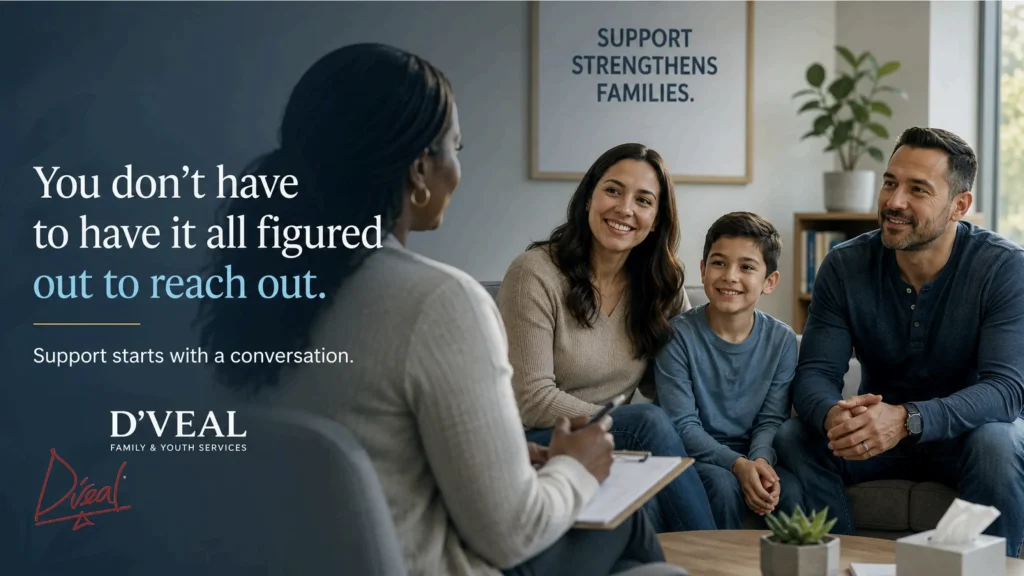
Demystifying that first call, and why so many families say they wish they’d made it sooner.
Most parents who come to D’Veal say some version of the same thing after their first few weeks with us: I wish we had called sooner.
It’s not because the process was hard. It’s because they’d built up an idea of what asking for help would look like, and the reality was nothing like it.
Here’s what actually happens.
Why “I Wish We Had Called Sooner” Comes Up So Often
It’s not that the process turns out to be easy, exactly. It’s that the version families imagine beforehand, an intake form, a stiff conversation, a judgment about their parenting, almost never matches what actually happens.
Most families tell us the hardest part was picking up the phone. Everything after that felt more like relief than dread.
The Fear Behind the Hesitation
For a lot of parents, reaching out feels like admitting defeat. Like they should have been able to handle it themselves, or like getting a therapist involved means something is seriously wrong.
There’s also the practical worry. Will my child feel singled out? Will this become a label that follows them? Will I have to explain things I’m not ready to explain to a stranger?
Those fears are real, and they’re also the biggest reason families wait longer than they need to before picking up the phone.
What the First Conversation Looks Like
You don’t need a diagnosis, a referral, or a crisis to call. You just need to say what you’ve been noticing.
From there, our team asks questions, listens, and figures out what kind of support actually fits your family. For some families, that’s individual therapy for a child. For others, it’s family sessions, school-based support, or a mix of everything.
There’s no script you have to follow and nothing you need to have figured out in advance. You’re not being evaluated. You’re being heard.
Why We Come to You
Most families picture therapy as an office visit, a waiting room, a fixed hour once a week. That’s not how D’Veal works.
Our therapists meet families in homes, schools, and community settings across the San Gabriel Valley. Kids open up differently in places they already feel safe, and therapists get to see how a challenge actually plays out in daily life, not just hear about it secondhand.
That difference matters. A child who shuts down in an unfamiliar office might talk freely at their own kitchen table.
“Connection isn’t a luxury in the healing process. It’s the foundation
of it.”
What If My Child Doesn’t Want to Talk to Someone?
This comes up constantly, and it’s a fair concern. Plenty of kids, especially teenagers, are not thrilled about the idea of a stranger asking them how they feel.
Part of why we work in familiar settings is exactly this. A kid who would shut down and give one-word answers in a clinical office often opens up on their own front porch or in a room at their own school, because the setting itself feels less like a spotlight.
Resistance at the start is normal, and it’s something our therapists are used to working through. It’s rarely a reason to wait.
The Whole Family Is Part of It
A child’s struggles don’t happen in isolation, and the support shouldn’t either. When parents understand what’s going on and have real tools to respond, progress happens faster and it holds.
That’s why our approach includes parents from the start. Not as bystanders, but as part of the team helping their child get better.
You’re Not Starting From Scratch
D’Veal has worked with families in the San Gabriel Valley since 1993. We’ve earned The Joint Commission’s Gold Seal of Approval® for Behavioral Health Care for the third consecutive triennial, which means the care you receive meets nationally recognized standards for safety and quality.
More than that, our team reflects the communities we serve. Support here is built around your family’s actual life, not a generic program handed to everyone the same way.
What Happens After That First Call
Once you reach out, someone from our team follows up to learn more about your family and match you with the right kind of support, whether that’s a therapist who comes to your home, a school-based counselor, or a combination of services.
From there, it’s less about a fixed program and more about a relationship that adjusts as your family’s needs change. Some families need a few months. Others stay connected longer. Either way, the goal is progress that actually holds, not a checklist to get through.
D’Veal Family and Youth Services serves children and families throughout the San Gabriel Valley.
Call (626) 296-8900 or visit dveal.org — no referral or diagnosis needed to start the conversation.
Frequently Asked Questions
What happens during the first visit or call?
Our team listens to what you've been noticing and helps figure out what kind of support fits your family. No diagnosis or referral is required to get started.
Do I need a referral to start services with D’Veal?
No. Families can reach out directly by calling (626) 296-8900 or visiting dveal.org.
Will services take place at an office, or somewhere else?
D’Veal provides field-based services in homes, schools, and community settings throughout the San Gabriel Valley, in addition to office-based options.
How is my whole family involved in the process?
D’Veal's approach includes parents and family members throughout treatment, not just the child, because progress holds better when the whole family understands what's happening and has tools to help.