





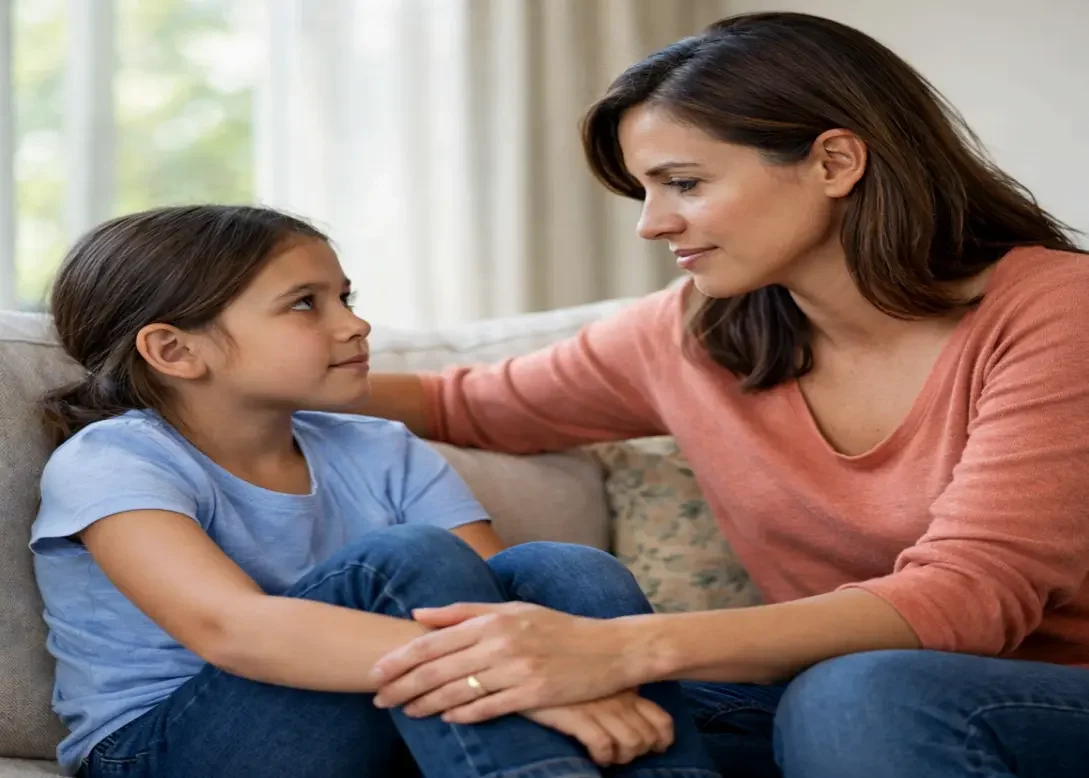
Helping Kids Navigate Big Emotions During Seasonal Change
By the D’Veal Communication Team
Why do seasonal changes affect children’s emotions?
Seasonal changes can impact children emotionally because their routines get disrupted. Shifts in school schedules, extended daylight hours, academic pressure before breaks, and anticipation of upcoming events can interfere with sleep, concentration, and emotional regulation. As children adapt to these transitions, they may show signs of irritability, anxiety, or emotional outbursts.
Last Tuesday my child burst into tears over a granola bar.
Not because they didn’t like granola bars.
Not because they were hungry.
But because the granola bar was broken in half.
Now, any experienced parent knows that a broken snack can absolutely trigger a meltdown under the right circumstances. But this one caught me off guard.
Five minutes earlier, everything had seemed fine.
School was fine.
Homework was fine.
Life was fine.
Until suddenly… it wasn’t.
And as I sat there holding two halves of a perfectly good snack, I realized something many parents notice this time of year:
When seasons change, kids’ emotions often change too.
Every year it happens.
The sun stays out a little longer. The jackets start disappearing from the hallway. And suddenly everyone is talking about spring break like it’s a national holiday.
For adults, this time of year feels hopeful. Lighter. A little easier to breathe.
For kids?
Not always.
Because while we’re celebrating warmer weather and dreaming about vacations, our children are quietly trying to figure out why everything suddenly feels… different.
And when kids feel different inside but don’t have the words for it?
That’s usually when the big emotions show up.
When the Little Things Suddenly Become Big Things
Maybe you’ve seen it already.
Your child walks in from school, tosses their backpack on the floor, and announces that homework is the worst thing that has ever happened in the history of humanity.
Yesterday they handled it just fine.
Today it’s a crisis.
Or bedtime suddenly turns into a full negotiation. The same routine you’ve done for months now somehow requires three extra hugs, two glasses of water, and a deep philosophical conversation about whether socks should technically count as pajamas.
And when something small goes wrong—like the wrong cereal or a missing pencil—tears appear out of nowhere.
If you’ve found yourself thinking:
“Where did this meltdown even come from?”
You’re not alone.
Seasonal transitions can quietly shake up a child’s emotional world more than we realize.
Why Spring Can Feel Like Emotional Whiplash
Children thrive on routine.
Not because they love structure the way adults love a good calendar planner—but because predictability helps their brains feel safe.
When kids know what comes next in their day, their nervous systems relax.
But seasonal changes tend to rearrange a lot of things all at once.
Suddenly there’s more daylight, which means bedtime feels earlier than it did a few weeks ago. School schedules start shifting as teachers wrap up lessons before break. Excitement about upcoming vacations begins bubbling under the surface.
Even the weather changing can subtly affect mood and energy.
Individually, these changes seem small.
But for a child who’s still learning how to regulate emotions, they can stack up quickly. And when that happens, feelings tend to leak out in unexpected ways.
A meltdown about math homework might actually be stress. Complaints about school could really be anxiety. And that sudden clinginess at bedtime? Often it’s just a child quietly asking for reassurance.
The Truth About Kids and Emotions
Here’s something every parent learns eventually:
Kids rarely say, “I’m feeling emotionally overwhelmed due to several environmental changes.”
If they did, parenting would be much easier. Instead, emotions come out sideways.
A child who normally breezes through homework might suddenly struggle to focus. Another child might cry over something that would normally roll right off their shoulders.
Sometimes kids get louder.
Sometimes they get quieter.
Both are ways of saying the same thing:
“Something inside me feels big right now.”
And when we start looking at behavior as communication, it becomes a little easier to respond with empathy instead of frustration.
The Magic of Ordinary Conversations
One of the best ways to help kids process emotions is surprisingly simple.
Talk to them.
Not in a serious sit-down conversation that makes everyone nervous.
Just the everyday kind.
Car rides are famous for this. Something about staring out the window seems to unlock children’s thoughts. Bedtime chats work well too, when the day finally slows down.
Instead of asking the classic question—”How was your day?”—try something a little different.
You might ask:
“What was something that made you smile today?”
Or,
“Was there anything that felt tricky?”
Some days you’ll get a long answer. Other days you’ll get a shrug. But over time, those little moments build something important: a habit of sharing feelings. And that habit becomes incredibly valuable as kids grow.
Why Kids Need to Feel Heard First
When a child is upset, most parents jump straight into problem-solving mode.
It’s instinct.
We want to fix things. Make it better. Move on. But children often need something else first.
They need to feel understood.
Imagine your child comes home frustrated about a difficult test or a disagreement with a friend. If the response is immediate reassurance—”Don’t worry about it”—they may feel like their emotions are being brushed aside.
A small shift in response can make a big difference.
Something like:
“That sounds really frustrating.”
Or,
“I can see why that upset you.”
These simple phrases send a powerful message:
Your feelings matter.
And once kids feel heard, they’re much more open to talking through solutions.
The Surprisingly Powerful Role of Routine
When life feels unpredictable, routines become emotional anchors.
They remind kids that even when things around them change, some things stay steady.
And routines don’t have to be complicated.
Family dinners.
A consistent bedtime routine.
A predictable time for homework each evening.
These small rhythms create a sense of stability that kids quietly depend on.
Think of routines like guardrails for emotions. They help keep everything from drifting too far off course.
The Healing Power of Fresh Air
After months of colder weather and indoor routines, spring offers something kids desperately need:
Movement.
Children process emotions not only through words, but through their bodies.
Running, climbing, biking, and playing outside help release stress that might otherwise come out as frustration or tears.
And the best part?
It doesn’t require anything fancy.
A walk after dinner. A quick trip to the park. A bike ride around the neighborhood.
Fresh air has a remarkable way of resetting everyone’s mood—including the parents.
Kids Are Always Watching
Children learn emotional skills in a fascinating way.
They watch us.
They notice how we react when we’re frustrated. They see whether we panic, laugh, take a breath, or talk things through.
Even the smallest moments become lessons.
When parents say things like:
“I’m feeling a little overwhelmed right now, so I’m going to take a deep breath.”
Kids learn that emotions are normal—and manageable.
Over time, they start practicing those same skills themselves.
Which is both incredible and slightly terrifying, because it means they also notice when we eat cookies in the pantry to avoid stress.
But that’s a blog for another day.
When Extra Support Is Helpful
Most emotional bumps during seasonal transitions are temporary.
As routines settle and kids adjust, things usually smooth out again.
But sometimes a child may need extra help navigating their emotions.
If emotional outbursts become frequent, school avoidance increases, or sleep and appetite changes continue for several weeks, it can be helpful to talk with a mental health professional.
Therapists and counselors can help children build tools for coping, communication, and emotional awareness.
And sometimes, having that extra support brings a sense of relief for the entire family.
The Bigger Picture
Childhood is full of transitions.
New school years. New friendships. Growing independence. Seasonal changes.
Each one brings excitement—and a few emotional bumps along the way.
But with patient, supportive adults nearby, children slowly learn something important:
Feelings don’t last forever.
Hard moments can be worked through.
And they never have to face those feelings alone.
Parents don’t need perfect answers.
Often the most powerful thing we can offer our kids is simply our presence.
Sometimes the most reassuring words a child can hear are the simplest ones:
“I’m here. We’ll figure this out together.”
And those words—spoken with patience and love—help children grow into emotionally confident people who can navigate life’s changes with strength.
Need More Support?
At D’Veal Family and Youth Services, we understand that sometimes families need more than daily practices — they need professional guidance, therapeutic support, and a community that gets it.
We offer therapy for children, teens, and families, parent coaching, crisis intervention, and community-based programs designed to meet you where you are and help you move forward together.
Visit www.dveal.org or call (626) 796-3453 to learn more. Let’s keep building emotionally healthy homes — one conversation, one routine, one validated feeling at a time.
Help Us Empower More Families When you support D’Veal, you help fund therapy sessions, school wellness initiatives, cultural events, and outreach programs that bring healing where it’s needed most.
**Make your 2026 gift today at www.dveal.org/donate
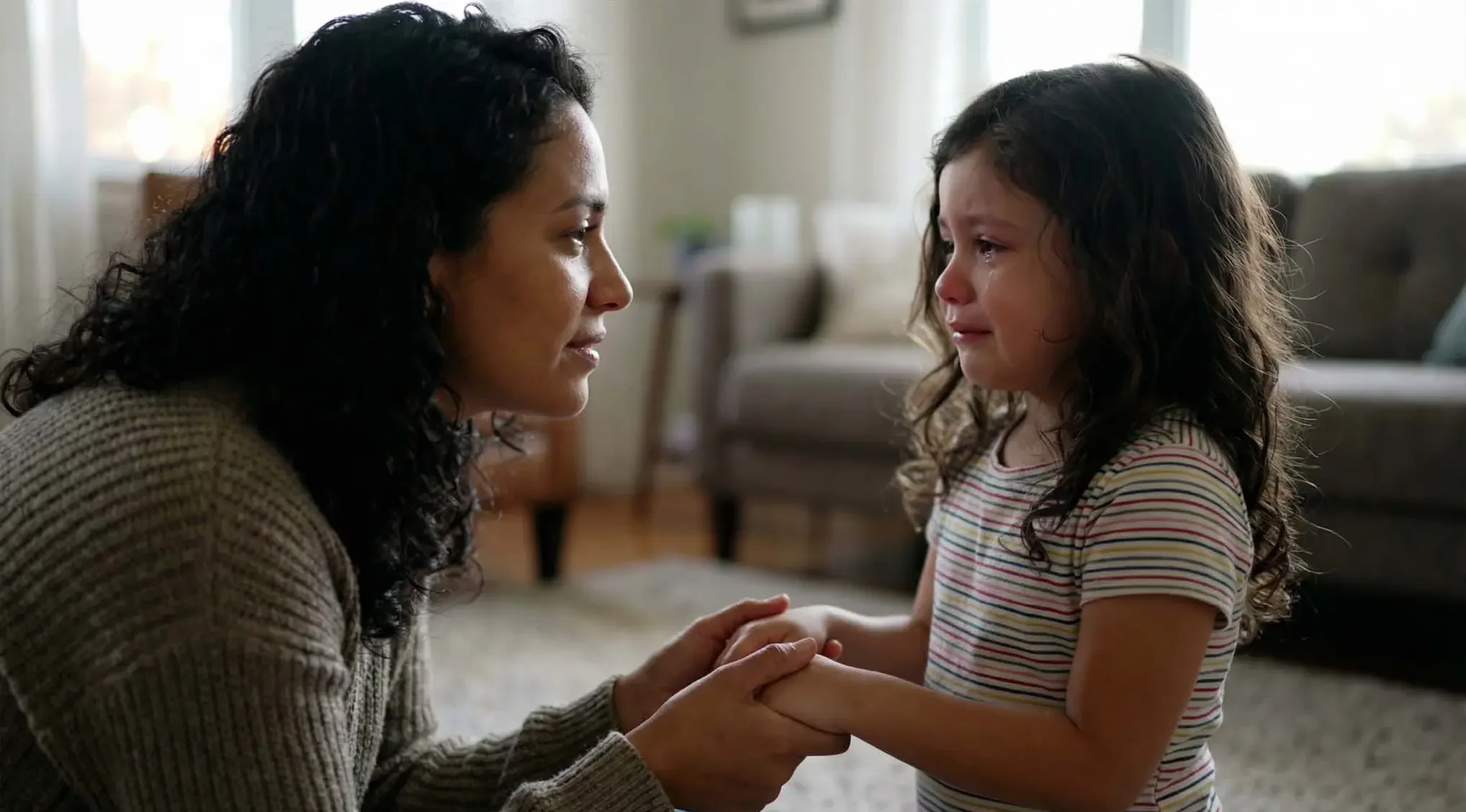
When Kids Don’t Have the Words: How to Help Children Express Big Feelings
D’Veal Communication Team
There’s a moment almost every parent has lived through.
Your child completely falls apart — over a broken crayon, the wrong color cup, a homework assignment, or a sideways glance from a sibling. The reaction is enormous. The situation feels minor. And you’re standing there wondering what on earth just happened.
Here’s what most children can’t yet tell you: “I don’t have the words for what I’m feeling.”
That gap between the size of the emotion and the language to express it is at the heart of almost every meltdown, outburst, and shutdown you’ll witness as a parent. Understanding it changes everything.
Why Children Communicate Through Behavior
Children experience the full spectrum of human emotion — disappointment, shame, jealousy, fear, loneliness, embarrassment. The difference between a child and an adult isn’t the depth of feeling. It’s the vocabulary to name it.
When kids don’t have words, they use behavior. A slammed door is a sentence. A stomachache before school is a paragraph. Silence from a usually talkative child is a whole chapter.
When a child says “I don’t care”, they might actually mean “I’m embarrassed”, “I’m afraid I’ll fail”, or “I feel completely left out”. Without emotional language, feelings don’t shrink — they overflow. And overflow looks like behavior.
This is why the better question isn’t “Why are you acting like this?” but “What is this behavior trying to tell me?”
The Science Behind Naming Emotions
Emotional language isn’t just a soft skill. Research in child development consistently shows that children who can label their emotions are significantly better at regulating them. Brain imaging studies confirm that simply naming a feeling reduces its intensity — neuroscientists call this “affect labeling.”
The difference between a child thinking “I’m bad” versus “I’m feeling frustrated” is enormous. One feels like identity. The other feels like a temporary state that can change. Giving children emotional vocabulary protects their self-esteem and builds coping skills they’ll rely on for the rest of their lives.
Why “Just Calm Down” Backfires — And What to Do Instead
Telling an overwhelmed child to calm down is a bit like telling someone who’s drowning to just swim. The instruction isn’t wrong — it’s just completely disconnected from what they’re capable of in that moment.
Before a child can regulate, two things need to happen first: connection, then language. Connection communicates “I see you.” Language gives the feeling a name. Regulation — the calm-down part — can only follow those two steps, not precede them.
That’s why validation is so powerful. Phrases like “That makes sense”, “I can see why that hurt”, or “I’d feel frustrated too” aren’t permissive parenting. When a child feels understood, their nervous system settles enough to actually hear you.
Building Emotional Vocabulary at Every Age
Building emotional language looks different depending on where your child is developmentally, but the foundation is the same at every stage: consistency matters more than perfection.
For younger children between ages 3 and 7, keep it simple. Narrate emotions as you observe them — “You look frustrated”, “That was really disappointing, huh?” — and use tools like feelings wheels or emotion-based picture books. Every time you name an emotion alongside an experience, you’re building a library they’ll draw from for years.
For elementary-aged children between 8 and 12, emotions become more layered. This is the ideal time to expand their vocabulary beyond “mad” or “sad” to include words like overwhelmed, embarrassed, nervous, or left out. This age group also benefits from learning that emotions can coexist — that it’s possible to feel excited and nervous at the same time, or proud and scared all at once.
For teenagers, direct emotional conversations often feel intrusive. Indirect questions like “On a scale of 1 to 10, how intense was today?” or “Do you want advice, or do you just want me to listen?” give teens emotional autonomy while keeping the door open.
The Most Overlooked Tool: Your Own Emotional Language
Children don’t learn emotional vocabulary primarily from what we teach them. They learn from what they watch us do.
When you say “I’m feeling overwhelmed, so I need a few minutes” or “I was frustrated earlier, but I talked it through”, you’re demonstrating something no lesson can replicate: that emotions are manageable, not terrifying. That naming them is a sign of strength, not weakness.
You don’t have to be a perfectly regulated parent. You just have to be an honest one.
Start Small Tonight
You don’t need lengthy conversations every evening. Emotional check-ins can be brief and woven naturally into your existing routine — a question at dinner, during a car ride, or at bedtime.
“What was the best and hardest part of your day?” goes a long way.
When check-ins become a habit, children internalize a powerful message: feelings are normal, talking about them is safe, and support is always available. When children know their feelings are welcome, they bring them to you.
And that changes everything.
Need More Support?
At D’Veal Family and Youth Services, we understand that sometimes families need more than daily practices — they need professional guidance, therapeutic support, and a community that gets it.
We offer therapy for children, teens, and families, parent coaching, crisis intervention, and community-based programs designed to meet you where you are and help you move forward together.
Visit www.dveal.org or call (626) 796-3453 to learn more. Let’s keep building emotionally healthy homes — one conversation, one routine, one validated feeling at a time.
Help Us Empower More Families When you support D’Veal, you help fund therapy sessions, school wellness initiatives, cultural events, and outreach programs that bring healing where it’s needed most.
**Make your 2026 gift today at **www.dveal.org/donate
Together, we can make this year a turning point for thousands of children and caregivers. Because healing starts at home.

When One Person Struggles, the Whole Family Feels It
D’Veal Communication Team
It’s Tuesday night. Dinner’s getting cold on the table.
Your teenager hasn’t left their room in three days. You’ve knocked. You’ve texted. You’ve tried to sound casual, then concerned, then maybe a little frustrated. Nothing works.
You want to help. You just don’t know how.
Or maybe it’s you who’s struggling—waking up already exhausted, snapping at your kids over small things, feeling like you’re failing at everything even though you’re doing your best.
Here’s what we’ve learned after years of working with families: mental health challenges don’t happen in isolation. When one person is struggling, everyone in the household feels the ripple effects. And when families get the right support, everyone benefits—not just the person in crisis.
The Truth About Family Mental Health
Research continues to show that children with a parent experiencing depression are three times more likely to develop anxiety or behavioral challenges themselves. But here’s the part that matters: when that parent receives support, those risks drop significantly.
Mental health moves through families like weather moves through a house. A child can sense when a caregiver is overwhelmed, even if nothing is said out loud. A parent can feel the shift when their teenager stops eating breakfast with the family or starts sleeping through alarms.
This isn’t about blame. It’s about connection.
Families who understand this, who treat mental health as something everyone participates in, tend to recover faster and build stronger foundations for the future.
What “Struggling in Silence” Actually Looks Like
Many families tell us they tried to handle things privately first. They had good reasons:
- Fear that asking for help meant admitting failure
- Worry about being judged by extended family or their community
- Not knowing where to start or who to trust
- Concerns about cost or time
So they waited, hoping things would improve on their own.
Instead, here’s what often happened:
A child’s anxiety turned into school refusal. A parent’s stress became chronic insomnia. Small conflicts became screaming matches. Everyone started walking on eggshells.
The problem isn’t that families aren’t strong enough. It’s that no one should have to carry
everything alone.
What Support Actually Means (And Doesn’t Mean)
Support doesn’t mean your family is broken.
It means you’re getting tools, perspective, and breathing room to handle what’s in front of you.
That might look like:
- Family therapy where everyone learns to communicate without shutting down or
blowing up - Parenting coaching that gives you specific strategies for a specific kid (not generic
advice that doesn’t fit your life) - Youth mentoring so your teen has another trusted adult to talk to
- Support groups where caregivers can be honest about how hard this is
- School-based counselors who can intervene early when something shifts
- Community mental health programs that meet families where they are—culturally,
financially, logistically
The best support systems don’t lecture. They listen. They understand that a single mom working
two jobs needs different resources than a two-parent household with flexible schedules. They
recognize that what works for one family might not work for another.
Your Kid Is Watching (Even When You Think They’re Not)
Children are remarkably perceptive. They see us even when we think they aren’t paying any attention to us.
But here’s the thing…
A seven-year-old might not understand the word “burnout,” but they notice when mom sits in the car for ten minutes before coming inside. A teenager might not ask what’s wrong, but they feel the tension when parents stop talking to each other.
When caregivers get support and they learn to manage stress, set boundaries, or process their own trauma—kids benefit even if they never set foot in a counselor’s office.
They experience:
- More patience when they make mistakes
- More consistent routines that help them feel safe
- Adults who are emotionally available instead of running on empty
One parent described it this way: “I didn’t realize how much my anxiety was controlling our
whole house until I started working on it. Now my kids aren’t tiptoeing around me. We can
actually enjoy being together.”
That shift matters more than most people realize.
Caregivers Burn Out Because We Expect Them to Be Superheroes
Parenting is hard. Foster parenting is harder. Caring for aging parents while raising your own kids is harder still.
And yet caregivers are constantly told: Be patient. Stay calm. Put everyone else first. Don’t complain.
Burnout doesn’t mean you’re weak. It means you’ve been running on empty for too long, and your body and mind are finally demanding rest.
Support allows caregivers to:
- Talk honestly about how overwhelming this is without being told to “just be grateful”
- Learn new approaches when the old ones stop working
- Take breaks without guilt
- Remember they’re a whole person, not just someone’s parent or caregiver
Strong families aren’t the ones who never struggle. They’re the ones who know when to ask for help and actually do it.
Support Can Prevent Crises (Which Is Better Than Managing Them)
Here’s what happens when families get early support:
Kids stay engaged in school instead of falling behind. Parents recognize warning signs before behavior escalates. Families develop communication skills that prevent conflicts from exploding.
Compare that to waiting until things are in full crisis mode—emergency room visits, police involvement, school suspensions, custody battles.
Prevention costs less. It causes less trauma. And it works better.
Communities with strong family mental health support see fewer child welfare cases, better school attendance, and more stable households. This isn’t theoretical; it’s measurable.
When we invest in supporting families early, everyone benefits.
Getting Help Is Not Giving Up
If you’re reading this and thinking, “We should probably talk to someone,” trust that instinct.
Reaching out doesn’t mean you’ve failed; it means you care enough about your family to get the tools you need.
It says: “We’re struggling, and we want to do better. We don’t want to keep repeating the same painful patterns.”
The families we see who make the most progress aren’t the ones without problems. They’re the ones willing to be honest about what’s not working and open to trying something new.
No Family Should Navigate This Alone
Mental health is not an individual problem to solve in private.
It’s woven into every conversation, every conflict, every moment of connection or disconnection in a household.
When families have access to real support—support that’s affordable, accessible, and respectful of who they are—they don’t just survive hard seasons. They grow stronger through them.
And that changes everything. Not just for one person.
For everyone.
Together, we can make this year a turning point for thousands of children and caregivers. Because healing starts at home.
When you support D’Veal, you help fund therapy sessions, school wellness initiatives, cultural events, and outreach programs that bring healing where it’s needed most.
If you’d like to help make a difference, make your 2026 gift today at www.dveal.org/donate
If your family is struggling, you don’t have to figure this out alone. Learn more about our family support services or call (626) 796-3453 today. Together, we can make this year a turning point for thousands of children and caregivers. Because healing starts at home.
- 1
- 2