Tag: Holiday Stress

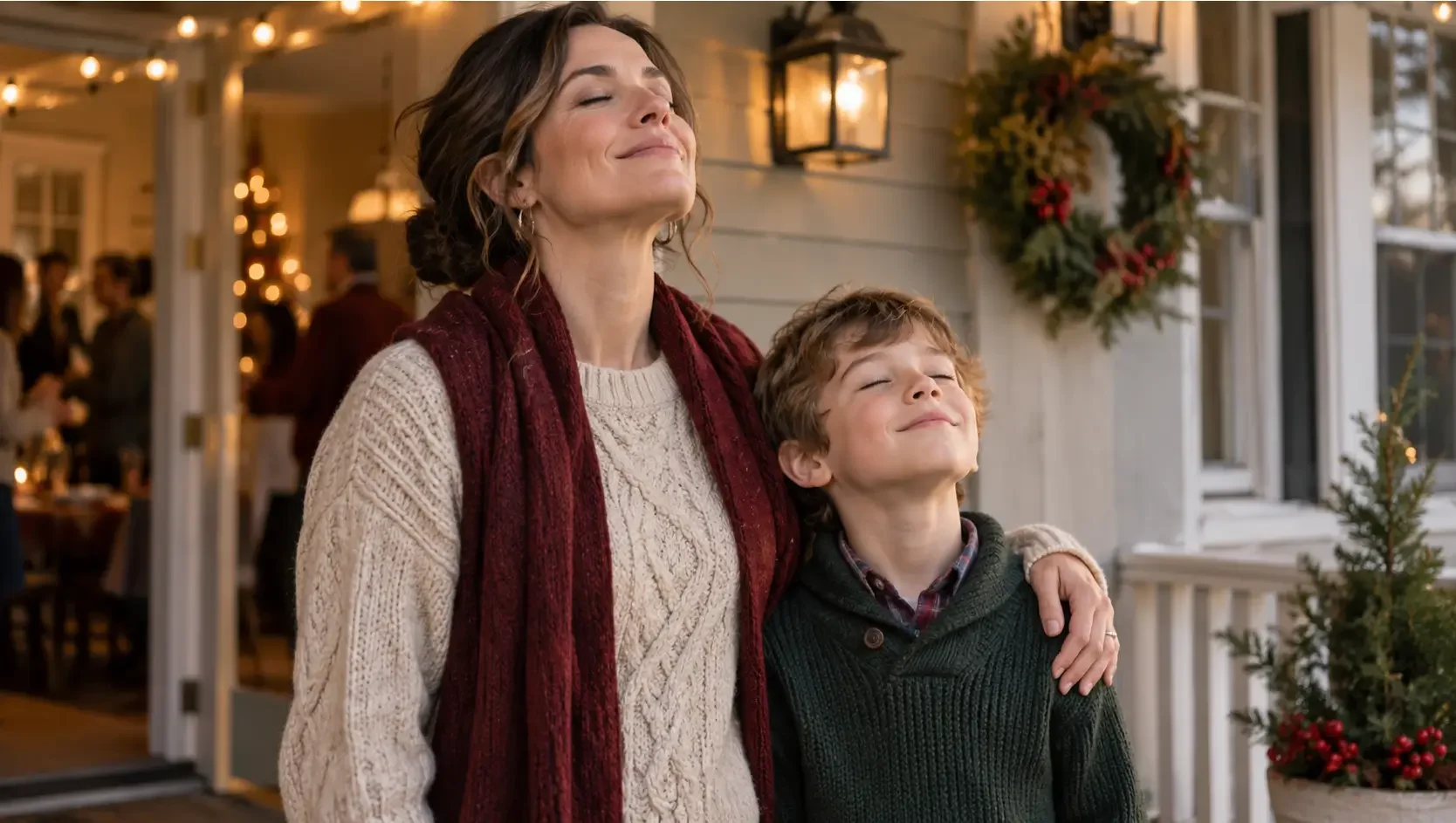
A mother and her young son stepping out onto a quiet front porch together during a busy holiday gathering, both taking a calm breath.
Publications

The Meltdown Before the Pie: When the Holidays Are Too Much for Your Child

Sometimes the hardest part of the holidays isn’t the cooking or the cost. It’s watching your child fall apart and not knowing why.

It was 3:15 on Thanksgiving afternoon. The turkey was resting. Twelve relatives were squeezed into the living room. And 7-year-old Mateo was under the dining table, sobbing, refusing to come out.

His mom, Ana, knelt beside the tablecloth and felt every eye in the room on her back. Her aunt said what everyone was thinking: “He’s just tired. Let him cry it out.” Her brother said something less kind.

Ana wanted to disappear. She’d spent three days cleaning and cooking. She had wanted this year to feel special. Instead, it felt like it was coming apart, and her son along with it.

(Mateo and Ana are a composite family, based on situations many parents describe. They are not real D’Veal clients.)

If you’ve lived some version of this moment, you are not alone. And your child isn’t “bad” or “spoiled.” Most of the time, a holiday meltdown is a message.

What the Meltdown Was Really Saying

Later that night, after everyone left, Ana sat on the edge of Mateo’s bed. She didn’t lecture. She just asked, “What was the hardest part of today?”

He thought for a long time. Then he said, “Everybody was loud. And Tio kept saying I was too big to sit on your lap. And I didn’t know when it was going to be over.”

There it was. Not one problem. A stack of them.

That’s how holiday stress works for a lot of kids. It isn’t one big thing. It’s the noise, the crowd, the late nights, the strange foods, the relatives who tease, and the feeling of having no control over the day. Each piece is small. Together, they can be too much for a young nervous system to handle.

Kids also soak up the stress around them. Pediatric psychologists point out that children notice when the adults in their lives are tense, and they often react to it, even when nobody says a word. Ana had been running on four hours of sleep for days. Mateo felt it.

And Ana wasn’t the only stressed adult in that house. In a November 2025 poll by the American Psychiatric Association, 41% of U.S. adults said they expected more holiday stress than the year before. About one in three said they worried about difficult family dynamics. Holiday gatherings put a lot of stressed people in one room. Kids are often the first to show it.

What Ana Did Differently in December

Ana didn’t cancel the holidays. She just changed a few things. None of them cost money.

She told Mateo the plan ahead of time. The morning of each family event, she walked him through it: who would be there, what they’d eat, and what time they’d leave. Kids handle hard days better when the day isn’t a mystery.

She picked a “break spot.” At her mom’s house, the back bedroom became Mateo’s quiet place. He could go there any time, with a book or his tablet, no questions asked. He only used it twice. Just knowing it was there helped.

She made a code word. If Mateo felt overwhelmed, he could say “pineapple.” Ana would step outside with him for five minutes. No scene, no explaining to relatives.

She kept bedtime close to normal. Not perfect. But no more 11 p.m. nights two days in a row.

She said no to one party. Her cousin’s open house was the same night as her work potluck. She skipped it. Nobody was upset. Mateo spent the evening building a blanket fort, and Ana sat on the couch for the first time all week.

She talked to her brother. Privately, before the next gathering, she asked him to stop teasing Mateo about being “too big.” It was an awkward conversation. It also worked.

She looked after herself. This was the hardest one. Ana asked her sister to bring dessert instead of making three pies herself. She went to bed earlier. She noticed that when she was calmer, Mateo was too.

Christmas wasn’t perfect. Mateo still got cranky by late afternoon. But there was no meltdown under the table. And on the drive home, he said, “That was a good day.”

Is It More Than Holiday Stress?

For many kids, holiday stress fades once school and normal routines come back in January. But sometimes the holidays bring something bigger to the surface.

It may be time to talk to a professional if your child:

  • Stays sad, worried, or irritable for more than two weeks, even on calm days
  • Has big changes in sleep or eating
  • Pulls away from friends and things they used to enjoy
  • Has meltdowns that seem much bigger than the situation
  • Says things like “I’m a burden” or talks about not wanting to be here

If your child ever talks about hurting themselves, call or text 988, the Suicide & Crisis Lifeline, any time, day or night.

Asking for help isn’t a sign that you failed as a parent. It’s a sign that you’re paying attention.

You Don’t Have to Figure It Out Alone

D’Veal Family and Youth Services has supported San Gabriel Valley families since 1993. We work with children and youth ages 0 to 20, and their families, in homes, schools, and the community. If the holidays are showing you that your child needs more support, we’d be glad to talk.

“Is your child struggling this holiday season? D’Veal Family and Youth Services is here to help. Call (626) 296-8900 or visit dveal.org. In a crisis, call or text 988 anytime.”

Want to help more San Gabriel Valley kids feel safe and supported? Visit the donate section at dveal.org to give.

Frequently Asked Questions

Why does my child have meltdowns at holiday gatherings?

Holiday gatherings pile up stressors: noise, crowds, late nights, new foods, and less control over the day. Each one is small, but together they can overwhelm a child. A meltdown is often a sign that your child has run out of ways to cope, not that they're misbehaving on purpose.

How can I prevent holiday meltdowns?

Tell your child the plan ahead of time, pick a quiet break spot, and agree on a code word they can use when it's too much. Keep bedtime close to normal and skip events that aren't important to your family. Taking care of your own stress helps, too.

What should I say to relatives who criticize how I handle my child?

Keep it short and calm, like "We've got this, thanks." If someone keeps teasing or criticizing your child, talk to them privately before the next gathering. Your child's comfort matters more than anyone's opinion of your parenting.

When should I worry that it's more than holiday stress?

If sadness, worry, or irritability lasts more than two weeks, or your child pulls away from friends and favorite activities, it may be more than holiday stress. Big changes in sleep or eating are also worth noticing. If your child talks about hurting themselves, call or text 988 right away.
A mother and her young son sitting close on the couch, the mother listening as he talks.
Publications

Is It Just Holiday Stress, or Is Something More Going On With My Child?

By D’Veal Communications Team

The holidays can be fun, and they can also be a lot. Here’s how to tell normal holiday stress from something bigger, and how to help your child feel calmer this season.

It’s the week before Thanksgiving. Your 9-year-old comes home from school and slams the door. Your teenager stays in her room all evening. Dinner turns into an argument about nothing.

Is it just the holidays? Most of the time, yes. But sometimes the holidays bring a bigger worry to the surface. Knowing the difference helps you know what to do next.

At D’Veal Family and Youth Services, we have helped children, teens, and families in the San Gabriel Valley for more than 30 years. Every year, we see how hard November and December can be on families. We also see how small changes at home can make a big difference.

Why the Holidays Can Be Hard on Kids

Grown-ups feel holiday stress too. In a 2025 national poll, about 4 in 10 adults said they expected this holiday season to be more stressful than the last one. Kids notice when the adults around them are tired or worried, even when nobody says a word.

Kids also lose the routine that helps them feel safe. School is out, bedtimes get later, and weekends fill up with trips and parties. Many kids picture a “perfect” holiday, and real life rarely looks like the movies. Big family gatherings can be loud and crowded, and a relative who teases can make a long day feel even longer.

For some families, the holidays also bring an empty seat at the table. A loved one may have passed away, or a parent may live somewhere else or have to work. When money is tight, kids can usually tell, and some quietly feel guilty for wanting things.

What Holiday Stress Looks Like

Kids don’t usually say, “I’m stressed.” Instead, you may see more tantrums or crankiness than usual. Your child may cling to you, complain of stomachaches or headaches, or have trouble sleeping. Some kids pull away from family and friends.

Teens can be harder to read. They may act like they don’t care about the holidays at all. In our experience, they often care a lot.

“A meltdown is often a message, not bad behavior. It can mean your child has simply run out of ways to cope.”

Holiday Stress or Something More?

Most holiday stress comes and goes around busy days, and it fades once life gets back to normal in January. A child who is cranky after a long family dinner but feels better after a good night’s sleep is usually just tired and overwhelmed.

It’s different when the change sticks around. If your child seems sad or “flat” most of the time, pulls away from everyone, or stops enjoying things they used to love, and it lasts more than two weeks, that’s a sign they may need more support. Our advice is simple: if something has felt “off” for more than two weeks, it’s worth talking to someone. You know your child best. Trust what you see.

If your child ever talks about wanting to die or hurt themselves, take it seriously every time. Call or text 988 any time, day or night. In an emergency, call 911.

Simple Ways to Make the Holidays Calmer

You can’t take away every source of stress, but you can make the season feel safer for your child. Start by keeping a few routines in place. Try to keep bedtime and mealtimes close to normal, even on days off. Before a busy day, tell your child the plan: who they’ll see, what you’ll do, and when you’ll head home. Kids handle hard days better when the day isn’t a mystery.

It’s also okay to say no. You don’t have to go to every party. Leave room for quiet time, like a short walk or a book, to reset a hard day. At big gatherings, agree on a code word or a quiet room your child can go to if things get too loud.

If money is tight, a few calm, honest words help more than silence. Something like “We’re keeping gifts small this year, and that’s okay” goes a long way. And if someone is missing this year, say their name. Share a favorite story or make their favorite dish together.
Last, take care of yourself. Rest when you can, accept help, and let go of “perfect.” When you’re calmer, your child is calmer too.

When Tips Aren’t Enough

Sometimes holiday stress shows a bigger problem, like worry that won’t go away, deep sadness, grief, or family conflict. That’s when extra support helps.

D’Veal works with children and teens from birth to age 20, and their families. Our counselors come to you, at home, at school, or in the community, so getting help doesn’t mean one more trip in an already busy season. We work with the whole family, not just the child.

“Is the holiday season weighing on your child or your family? D’Veal Family and Youth Services is here to help. Call (626) 296-8900 or visit dveal.org. In a crisis, call or text 988 anytime.”

Want to help more San Gabriel Valley kids feel safe and supported? Visit the donate section at dveal.org to give.

Frequently Asked Questions

Is it normal for my child to act out more during the holidays?

Yes. Late nights, busy days, and changes in routine can make any child cranky. Most kids feel better once things get back to normal. If it lasts more than a couple of weeks, talk to a professional.

How can I tell if my teen is stressed or depressed?

Stress usually comes and goes with busy days. If your teen seems sad or crabby most days for two weeks or more, or stops caring about things they used to love, it's time to reach out for help.

How do I help my child through the holidays after a family loss?

Talk about the person who died and let your child help pick which traditions to keep. Sad moments may come and go, and that's normal. Let your child have fun without feeling guilty.

Where can San Gabriel Valley families get help for a child?

D'Veal Family and Youth Services helps children and teens from birth to age 20, at home, at school, and in the community. Call (626) 296-8900 or visit dveal.org. In a crisis, call or text 988.